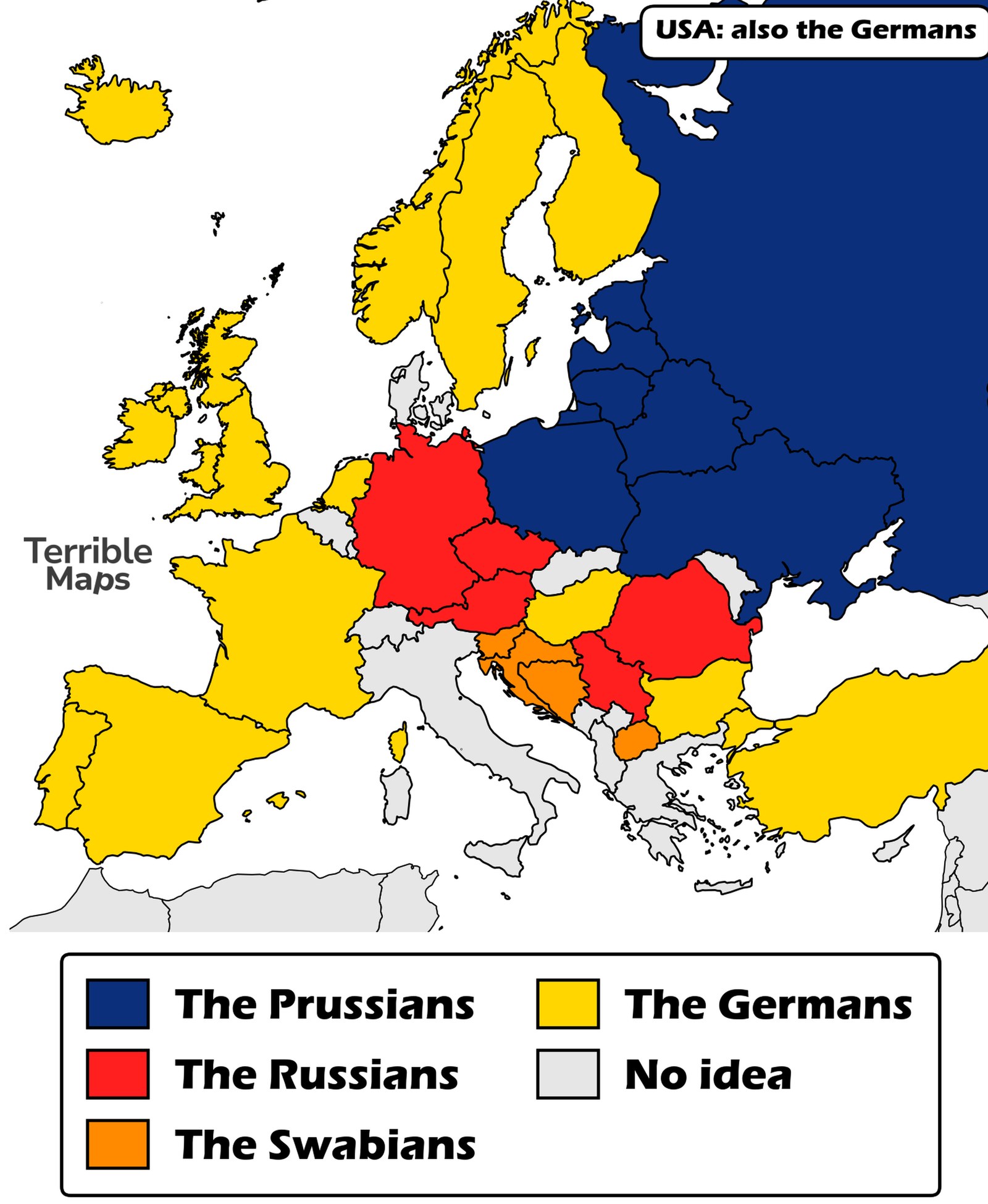
Russians named the cockroach after the Prussians, Germans named it after the Russians, and Slovenes and Croats named it after the Swabians. This map shows which foreigners each country in Europe named the same small brown cockroach after.
Why it’s named after foreigners
The Prussian name is the best known. The story in Russia is that soldiers brought the insects back from Prussia after the Seven Years’ War, although it may just be that soldiers who swarm over your land and eat your food reminded people of cockroaches. The name spread, and Poles, Ukrainians, Belarusians, Estonians, Latvians and Lithuanians all have a version of it.
The Swabian name is harder to explain, because Swabia is only one part of Germany. It sounds like Schabe, the German word for cockroach, and a Czech etymological dictionary suggests it may also have been a dig at the German-speaking Habsburgs. Germans use the name too, along with Russe and Franzose, so in Germany the same insect can be a Swabian, a Russian or a Frenchman.
Why most of Europe says German
That one comes from Carl Linnaeus, who was handed a specimen from Germany in 1767 and named the species Blattella germanica. Most countries just translated it. Germany’s official name is Deutsche Schabe, which means German cockroach, so the Germans didn’t entirely get away with it.
It isn’t German, as it happens. It came from Southeast Asia and travelled with people, which makes everyone on this map wrong.
What the colours mean
Several countries have more than one name. Czechs also use Swabian, for example, and Hungary also has Muscovite bug. I’ve picked one each. Grey means I couldn’t find a name, not that they’ve taken responsibility.
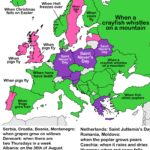
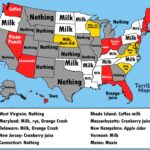
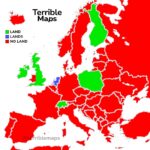
If you like this sort of thing, see what each country says instead of when pigs fly or European countries with land.
Sources: The Christian Science Monitor, Spektrum, Wiktionary, and the Wikipedia page for the species in each language.
See every country
| Country | Name | Named after |
|---|---|---|
| Russia | prusak | Prussian |
| Ukraine | prusak | Prussian |
| Belarus | prusak | Prussian |
| Poland | prusak | Prussian |
| Estonia | prussakas | Prussian |
| Latvia | prusaks | Prussian |
| Lithuania | prūsokas | Prussian |
| Germany | Russe | Russian (the official name is Deutsche Schabe, German cockroach) |
| Austria | Rus (slang) | Russian |
| Czechia | rus | Russian |
| Romania | rus (dialect) | Russian |
| Serbia | бубаруса | Russian bug |
| Slovenia | švab | Swabian |
| Croatia | švaba | Swabian |
| Bosnia | bubašvaba | Swabian bug |
| North Macedonia | bubašvaba | Swabian bug |
| UK and Ireland | German cockroach | German |
| USA | German cockroach | German |
| Netherlands | Duitse kakkerlak | German |
| Sweden | tysk kackerlacka | German |
| Norway | tysk kakerlakk | German |
| Iceland | þýski kakkalakkinn | German |
| France | blatte germanique | German |
| Spain | cucaracha alemana | German |
| Portugal | barata-germânica | German |
| Turkey | Alman hamam böceği | German |
| Hungary | német csótány | German |
| Finland | saksantorakka | German |
| Bulgaria | германска хлебарка | German |
Share this map
More from Terrible Maps
 The bookTerrible Maps: Hilarious Maps for a Ridiculous WorldOut now in the UK, US, Canada and Australia.
 The shopShirts, hoodies, mugs and printsIncluding the Africa / Asia T-shirt.
There’s a new terrible map most days on Facebook and Instagram.