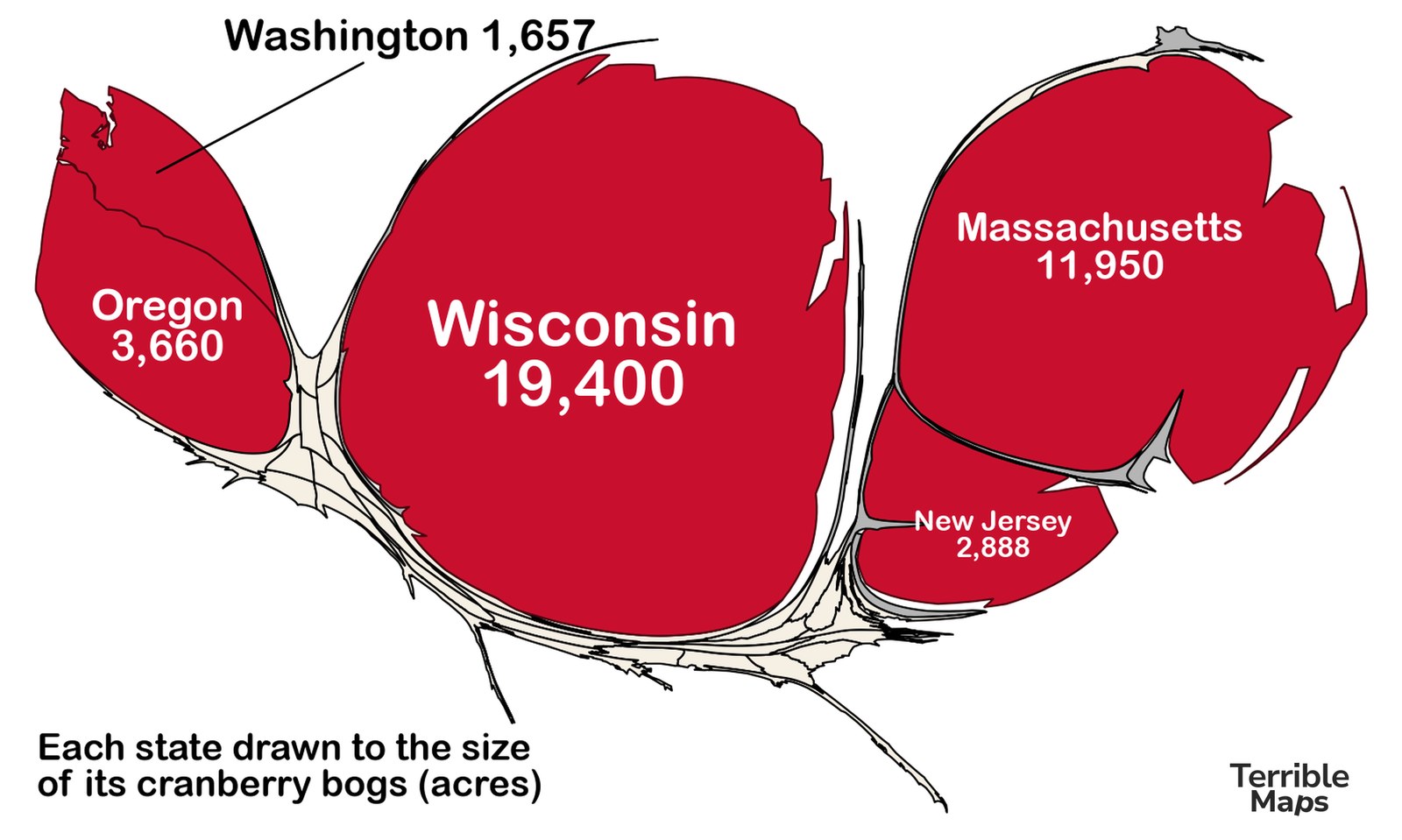
Every state on this map is drawn to the size of its cranberry bogs, which makes Wisconsin and Massachusetts enormous and squeezes the rest of the country into thin strands between them.
Which state grows the most cranberries?
Wisconsin grows the most cranberries by a long way, 4.8 million barrels of them in 2025, which was more than 60% of the whole US crop and two and a half times as much as Massachusetts.
A barrel of cranberries is 100 pounds, so that’s 480 million pounds of cranberries from one state in one year.
Wisconsin also has 19,400 acres of cranberry bogs, just under half of the country’s total. The map is drawn by acres of bogs rather than by crop, which is why Massachusetts looks closer on the map than it is in barrels.
Wood and Jackson counties grow the most, on flat, sandy, acidic ground where other plants struggle and cranberries don’t.
Wisconsin made the cranberry its state fruit in 2003, after a class of fifth graders suggested it.
Oregon, New Jersey and Washington grow most of the rest. The US Department of Agriculture doesn’t publish a figure for eight more states, among them Maine, Michigan and New York, so they get almost no room on the map.
Across the world, the US grows about 65% of all cranberries, and Canada, mostly Quebec, grows nearly all of the rest.
So Wisconsin on its own grows more cranberries than any country in the world, except the one it’s in.
Why Massachusetts is the famous one
Cranberries were first farmed in Massachusetts, by a Revolutionary War veteran called Henry Hall, who started planting them on Cape Cod around 1816.
Ocean Spray, the farmers’ cooperative that now handles most of North America’s cranberries, was founded in Massachusetts by three growers in 1930.
Massachusetts was the biggest cranberry state until 1994, when Wisconsin overtook it. It has been second ever since.
Do cranberries grow underwater?
No. For most of the year a cranberry bog is a field of low vines on dry beds, and it’s only flooded for the harvest and in winter, to protect the vines from the cold.
At harvest, machines stir the water to knock the berries off the vines, and the berries float to the top because each one has four pockets of air inside it.
The air pockets also make a fresh cranberry bounce, so growers grade their berries partly on how well they bounce, since a soft one won’t.
The 1959 cranberry scare
On 9 November 1959, a little over two weeks before Thanksgiving, the US health secretary, Arthur Flemming, announced that some cranberries from Oregon and Washington had tested positive for a weedkiller that had caused cancer in rats.
He advised anyone who couldn’t tell where their berries had been grown not to buy any. Ohio and San Francisco banned cranberry sales altogether, and Thanksgiving sales ended up 70% below normal.
In Wisconsin Rapids, in Wood County, Vice President Richard Nixon ate four helpings of cranberries and said he saw “no reason for hysteria over cranberries on any consumer’s part”.
That same night Senator John Kennedy of Massachusetts, who was also hoping to run for president the next year, drank two glasses of cranberry juice.
President Eisenhower’s Thanksgiving dinner had applesauce in place of cranberry sauce.
In the end almost all of that year’s crop was cleared, but Ocean Spray, which had told its growers not to use the weedkiller, still had to lay off a third of its workers.
The ridges on the sauce
The ridges on the log of cranberry sauce that slides out of a can are just the shape of the inside of the can.
Marcus Urann, one of Ocean Spray’s three founders, first sold canned cranberry sauce in 1912, in Massachusetts, and Ocean Spray took it across the country in 1941.
| State | Acres of cranberry bogs, 2022 | Share of US |
|---|---|---|
| Wisconsin | 19,400 | 48% |
| Massachusetts | 11,950 | 30% |
| Oregon | 3,660 | 9% |
| New Jersey | 2,888 | 7% |
| Washington | 1,657 | 4% |
See all 14 states
| Vermont | 6 | Under 1% |
| Connecticut | Not published | |
| Delaware | Not published | |
| Maine | Not published | |
| Michigan | Not published | |
| Minnesota | Not published | |
| New York | Not published | |
| Pennsylvania | Not published | |
| Rhode Island | Not published |
If you like this sort of thing, see where each country thinks the turkey is from or the rest of my Thanksgiving maps.
Sources: USDA 2022 Census of Agriculture (cranberries, acres bearing); WisBusiness, 2025 crop; University of Wisconsin-Madison; State Symbols USA; Statistics Canada; Wikipedia, Cranberry, Ocean Spray, Cranberry scare of 1959, Cranberry sauce; Cranberry Institute, history and harvest; Farmers’ Almanac, bogs and cranberry sauce; Popular Science; Mining Journal; Bangor Daily News; American Council on Science and Health.
 What each country calls splitting the bill, translated literally
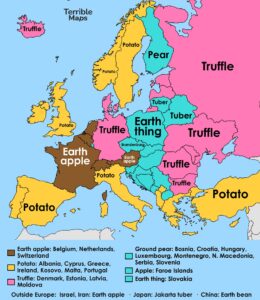 What Europe calls a potato, translated literally
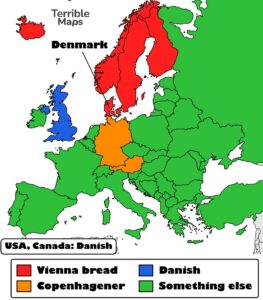 What Danish pastries are called in Denmark
Share this map
More from Terrible Maps
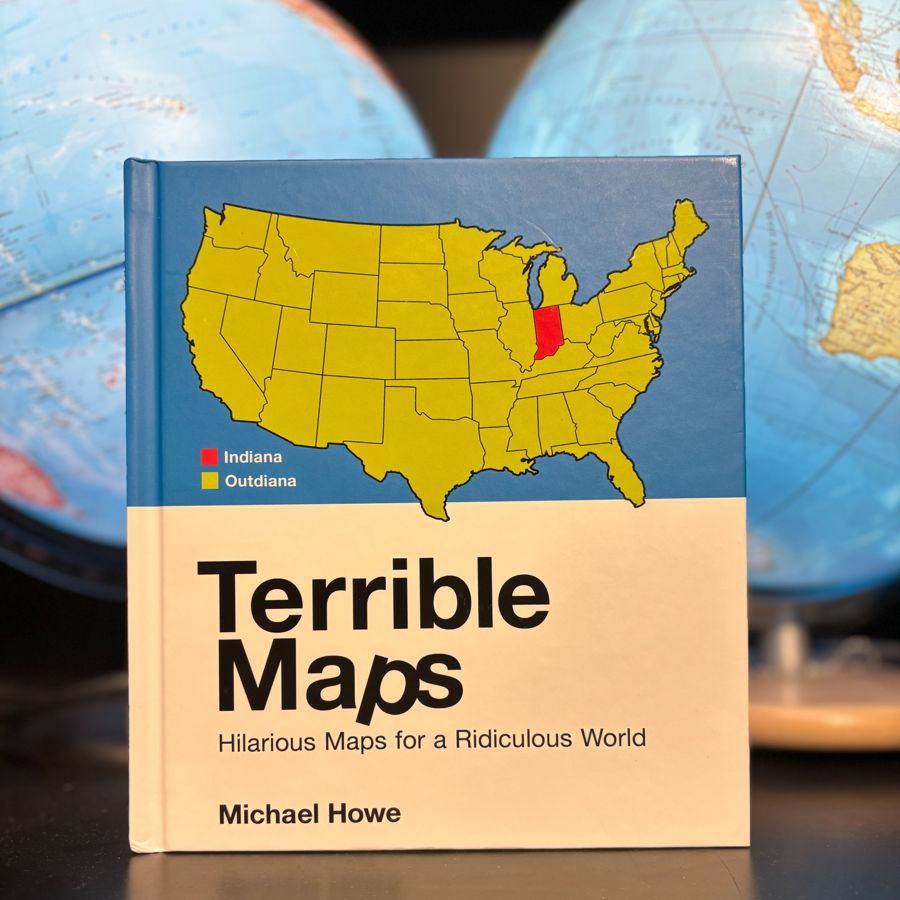 The bookTerrible Maps: Hilarious Maps for a Ridiculous WorldOut now in the UK, US, Canada and Australia.
 The shopShirts, hoodies, mugs and printsIncluding the Africa / Asia T-shirt.
There’s a new terrible map most days on Facebook and Instagram.