Seventeen maps about animals, including which countries think raccoons are very clean bears, where every whale belongs to the King, where you can’t own just one guinea pig, and how many legs a chicken has.
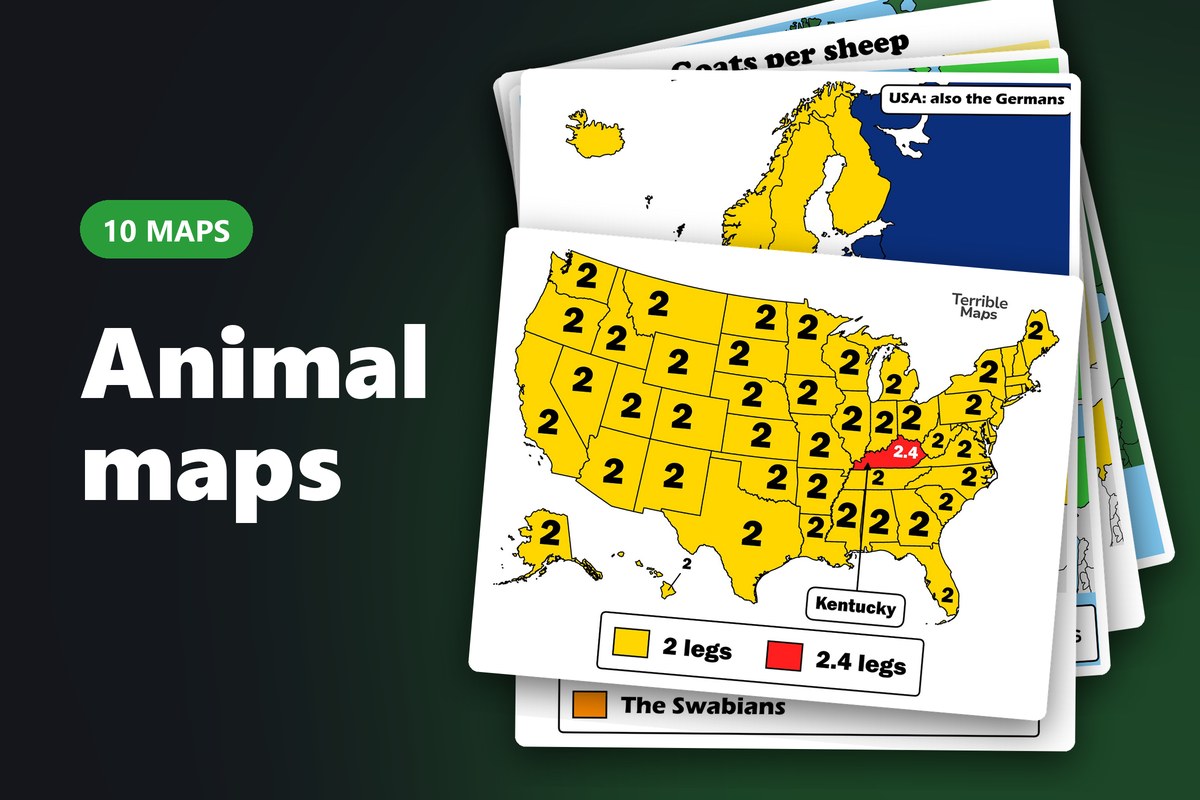
Average number of legs per chicken, by state
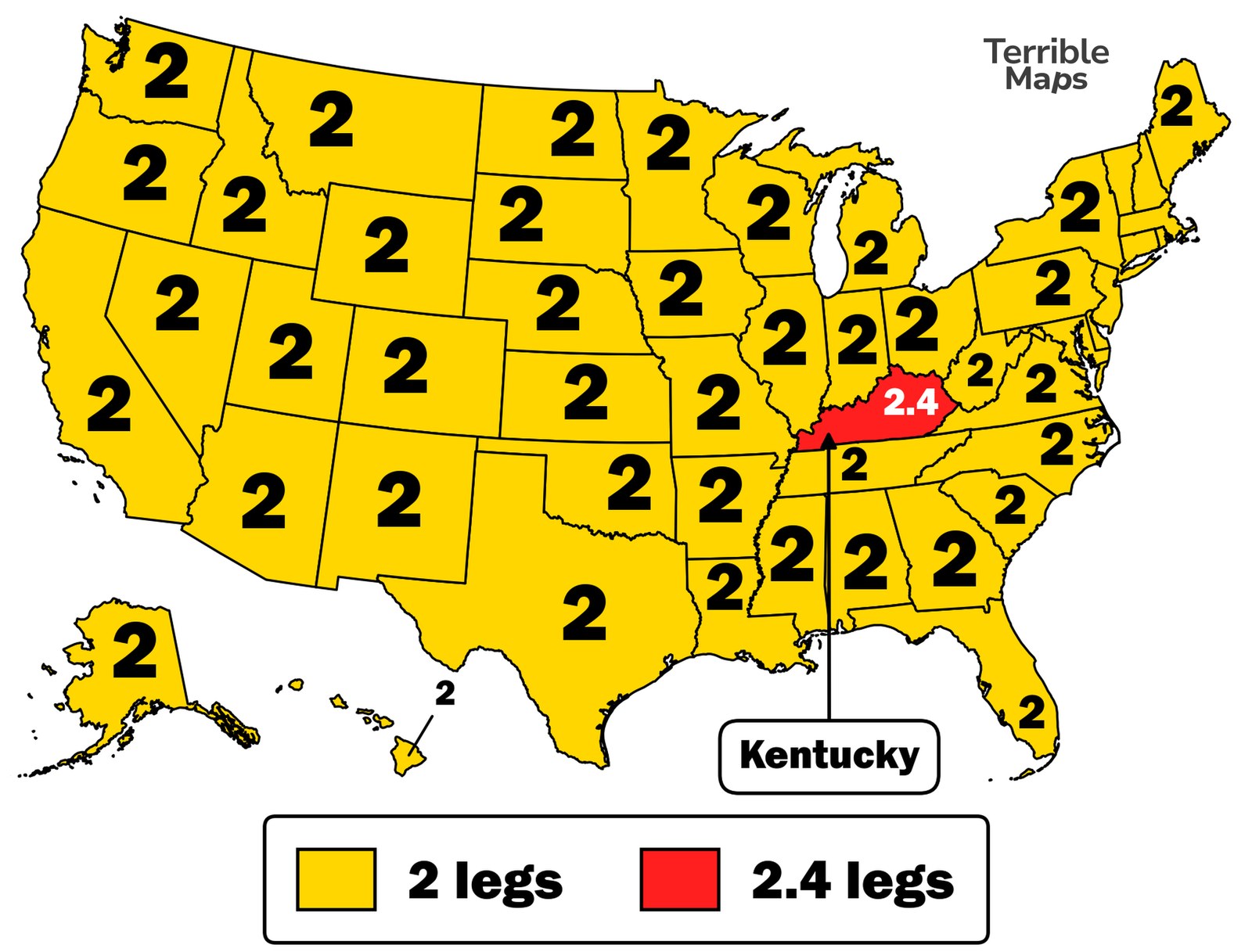
Two legs per chicken in every state except Kentucky, where the average comes out at 2.4.
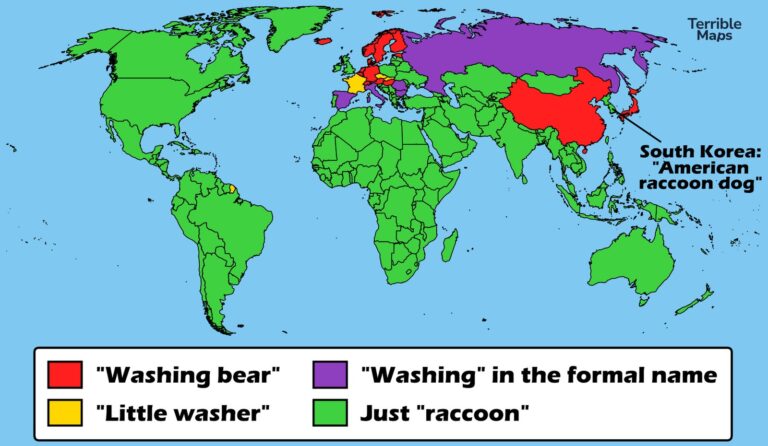
Countries that think raccoons are just very clean bears
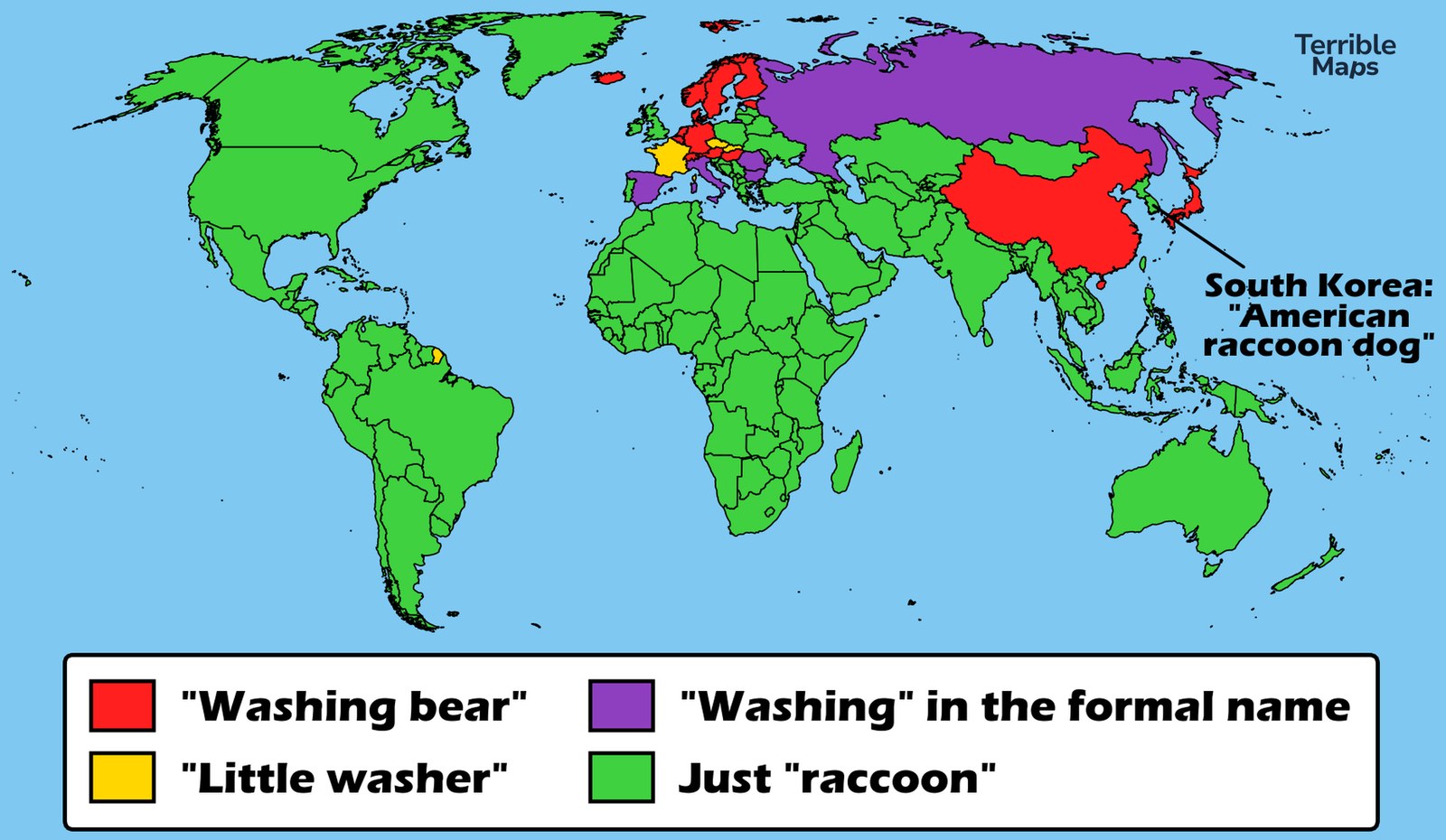
In German a raccoon is a Waschbär, a washing bear, copied from its old scientific name Ursus lotor from 1758. Swedish, Danish, Norwegian, Finnish and Japanese all went for a washing bear too.
This map has its own post: Countries that think raccoons are just very clean bears.
Sources: Wiktionary, Waschbär, Wiktionary, raccoon (translations).
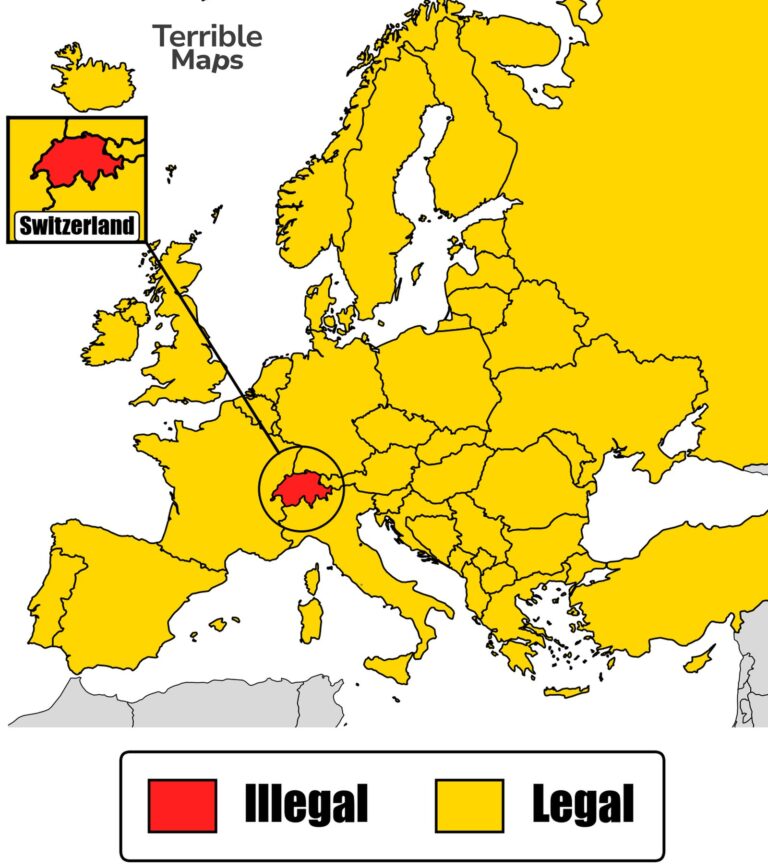
Countries where it's illegal to own just one guinea pig

Switzerland’s animal protection rules, in force since September 2008, say guinea pigs are too social to live alone, so they have to be kept in groups of at least two.
This map has its own post: Countries where it’s illegal to own just one guinea pig.
Source: Swissinfo, fact check: lonely guinea pigs.
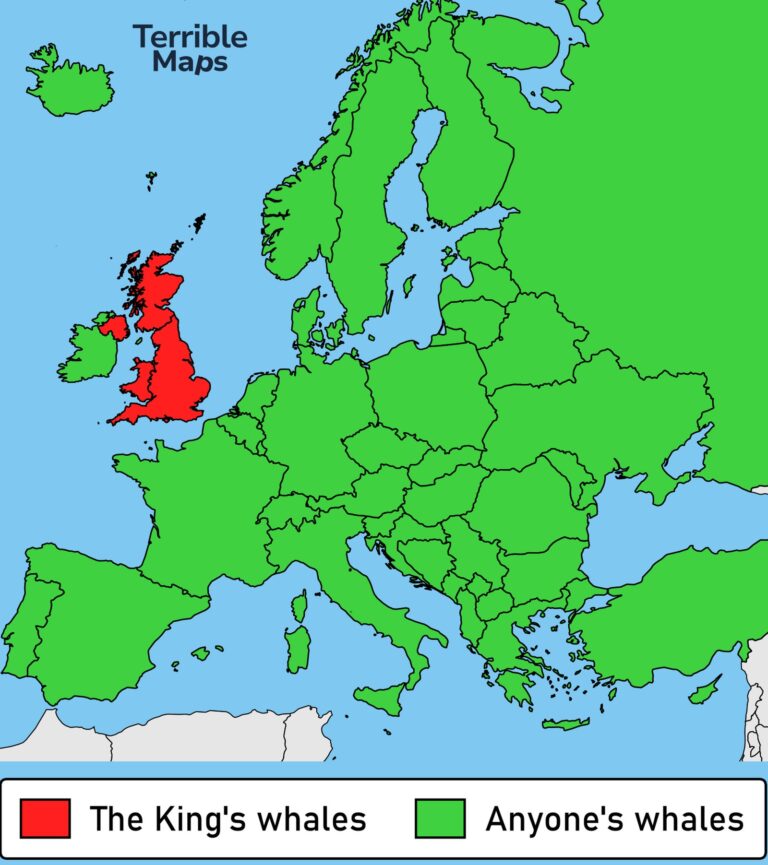
Countries where every whale belongs to the King

Whales and sturgeon are royal fish under a statute from 1324, and any that are taken become the personal property of the monarch. Scotland only claims the whales too big to be pulled ashore by a cart and six oxen.
This map has its own post: Countries where every whale belongs to the King.
Source: Wikipedia, Royal fish.
Places where cats are illegal

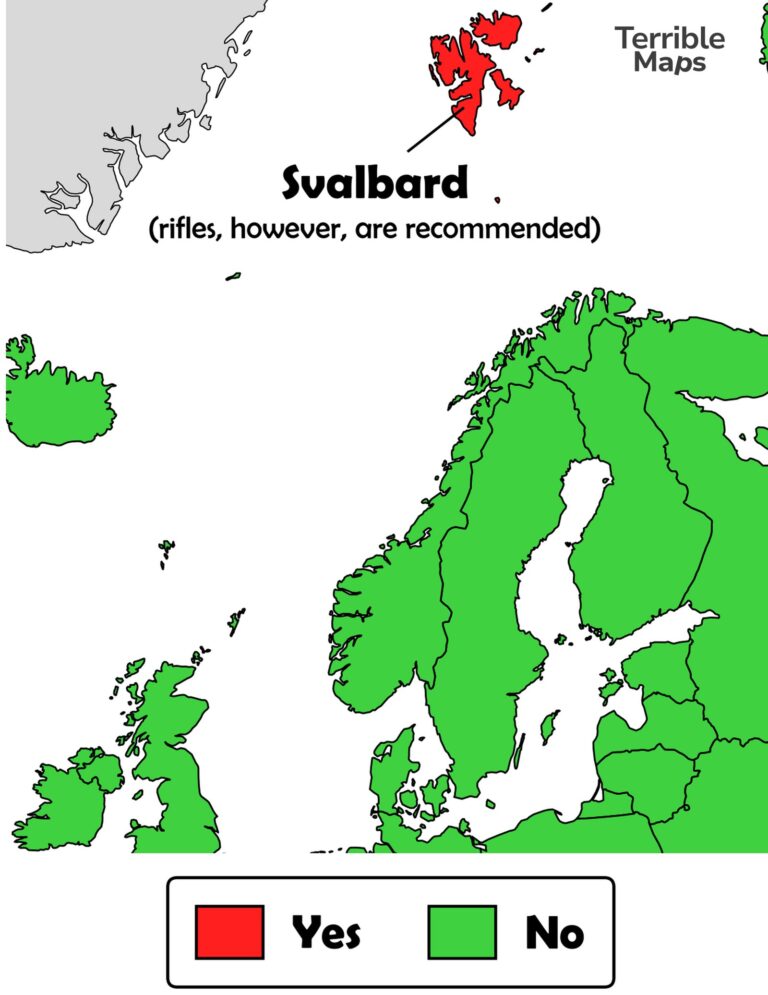
Svalbard bans bringing in most live mammals. Anyone leaving the settlements has to carry something to scare off polar bears, and the Governor recommends taking a firearm.
This map has its own post: Places where cats are illegal.
Sources: Wikipedia, Longyearbyen, Governor of Svalbard, weapons.
Countries where handling a salmon in suspicious circumstances is a crime
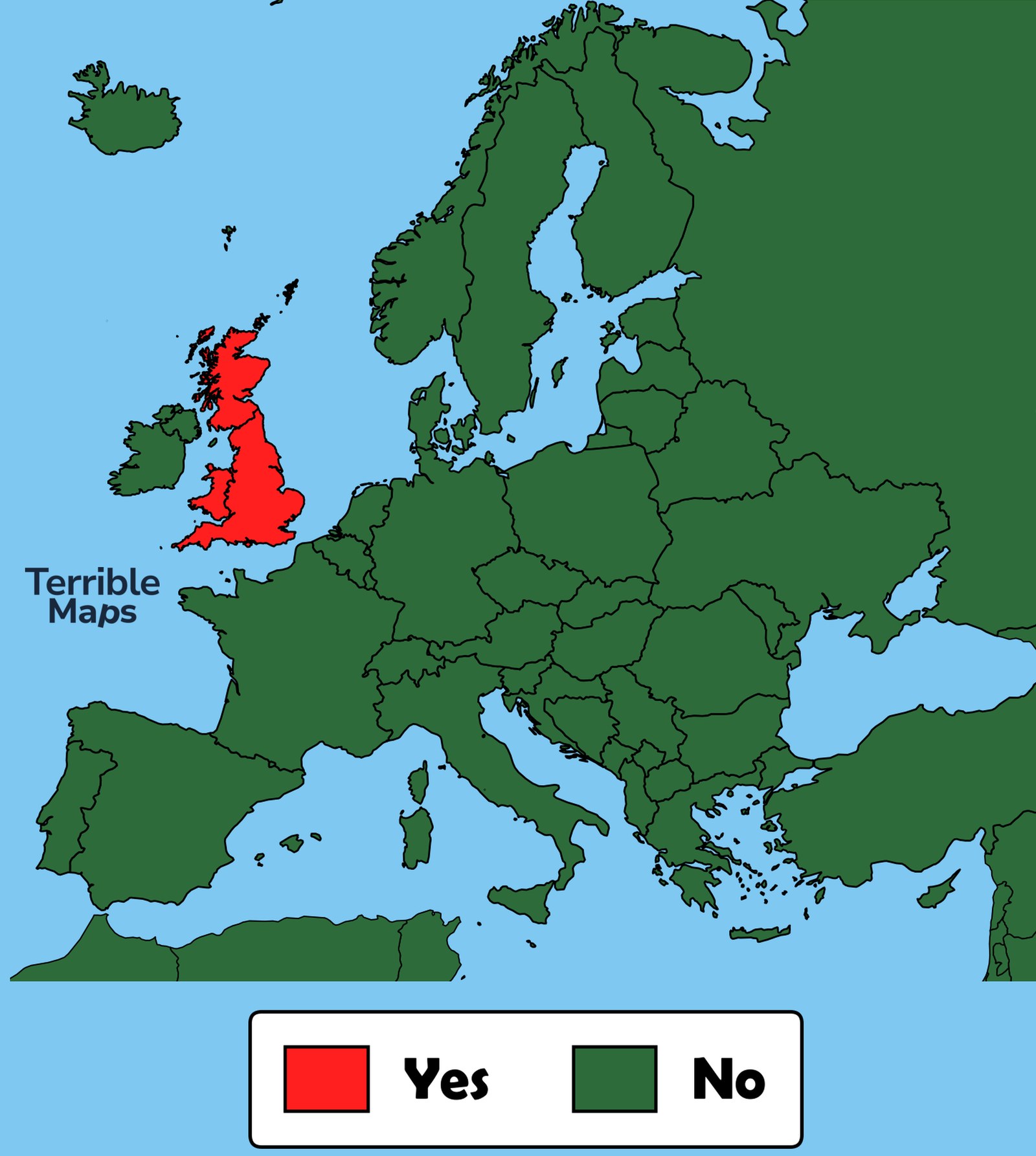
It’s section 32 of the Salmon Act 1986. In England and Wales it has covered trout, eels, lampreys and smelt as well since 2009.
This map has its own post: Countries where handling a salmon in suspicious circumstances is a crime.
Sources: Salmon Act 1986, section 32, Marine and Coastal Access Act 2009, section 229.
What each country calls a hippo, translated literally
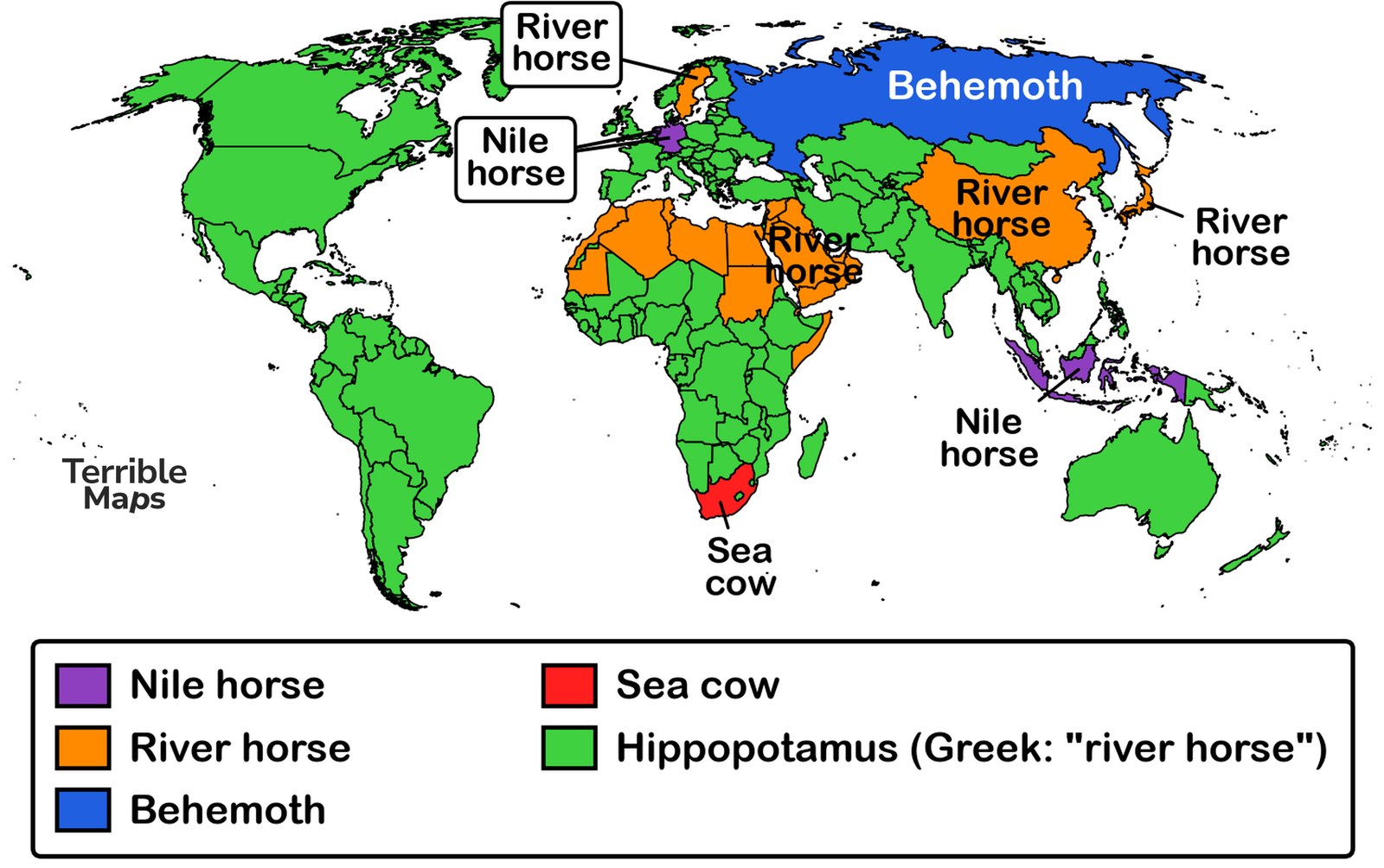
Hippopotamus is Greek for river horse. German also has Nilpferd, a Nile horse, Russian calls it a begemot, from the Hebrew behemoth, and in Afrikaans it’s a seekoei, a sea cow.
This map has its own post: What each country calls a hippo, translated literally.
Sources: Wiktionary, hippopotamus, Nilpferd, бегемот, seekoei.
Which foreigners each country named the cockroach after
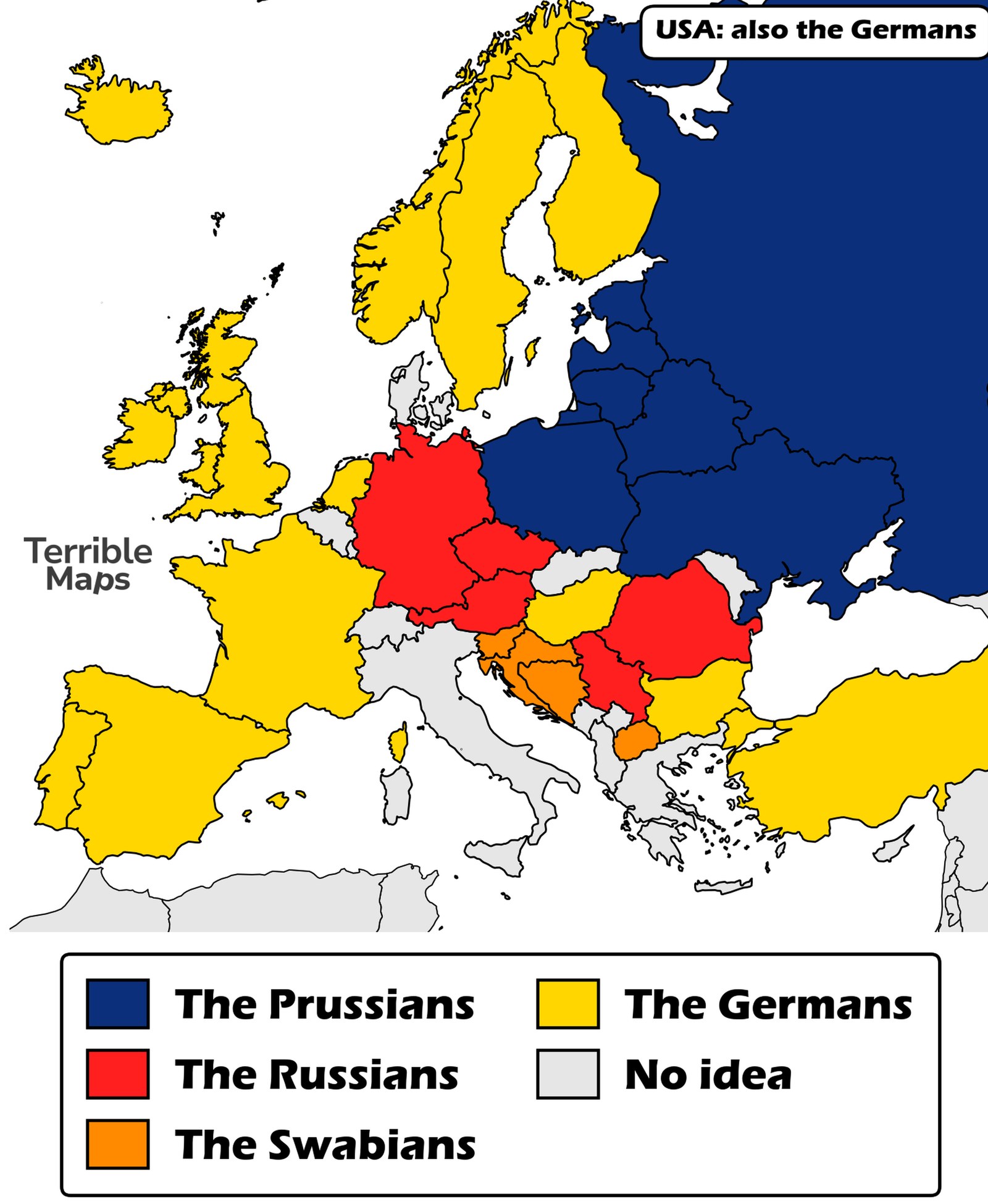
In Russian it’s the Prussian, and in Czech, Croatian and Macedonian it’s named after the Swabians. English blames Germany because Linnaeus was sent a specimen from there in 1767.
This map has its own post: Which foreigners each country named the cockroach after.
Source: Christian Science Monitor, When names for cockroaches reflect national rivalries.
Goats per sheep in Europe
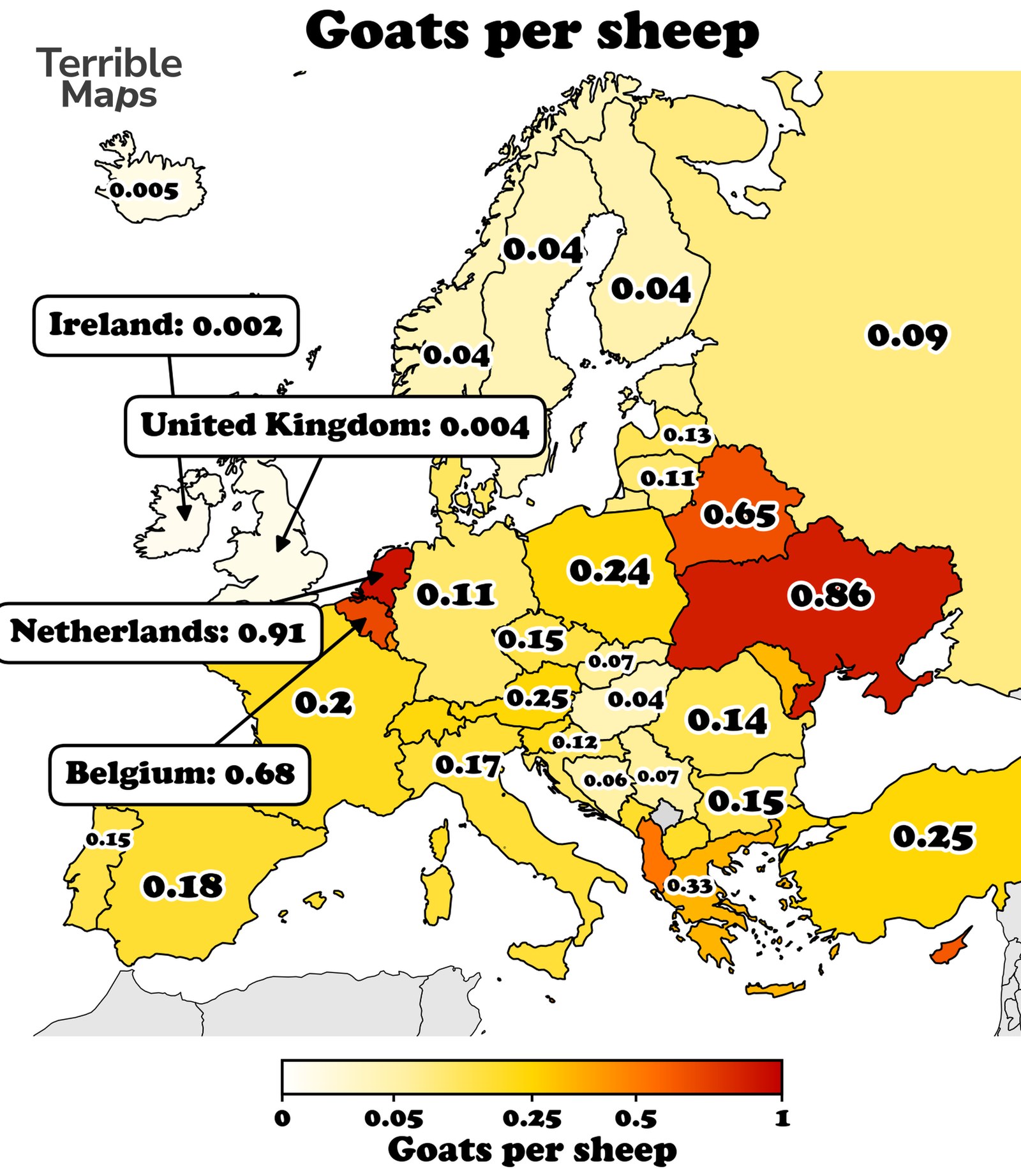
The Netherlands comes closest to one goat per sheep. The Dutch statistics office counted 553,000 goats and 602,000 sheep there in December 2025.
Source: CBS (Statistics Netherlands), livestock.
Each state's unofficial state animal
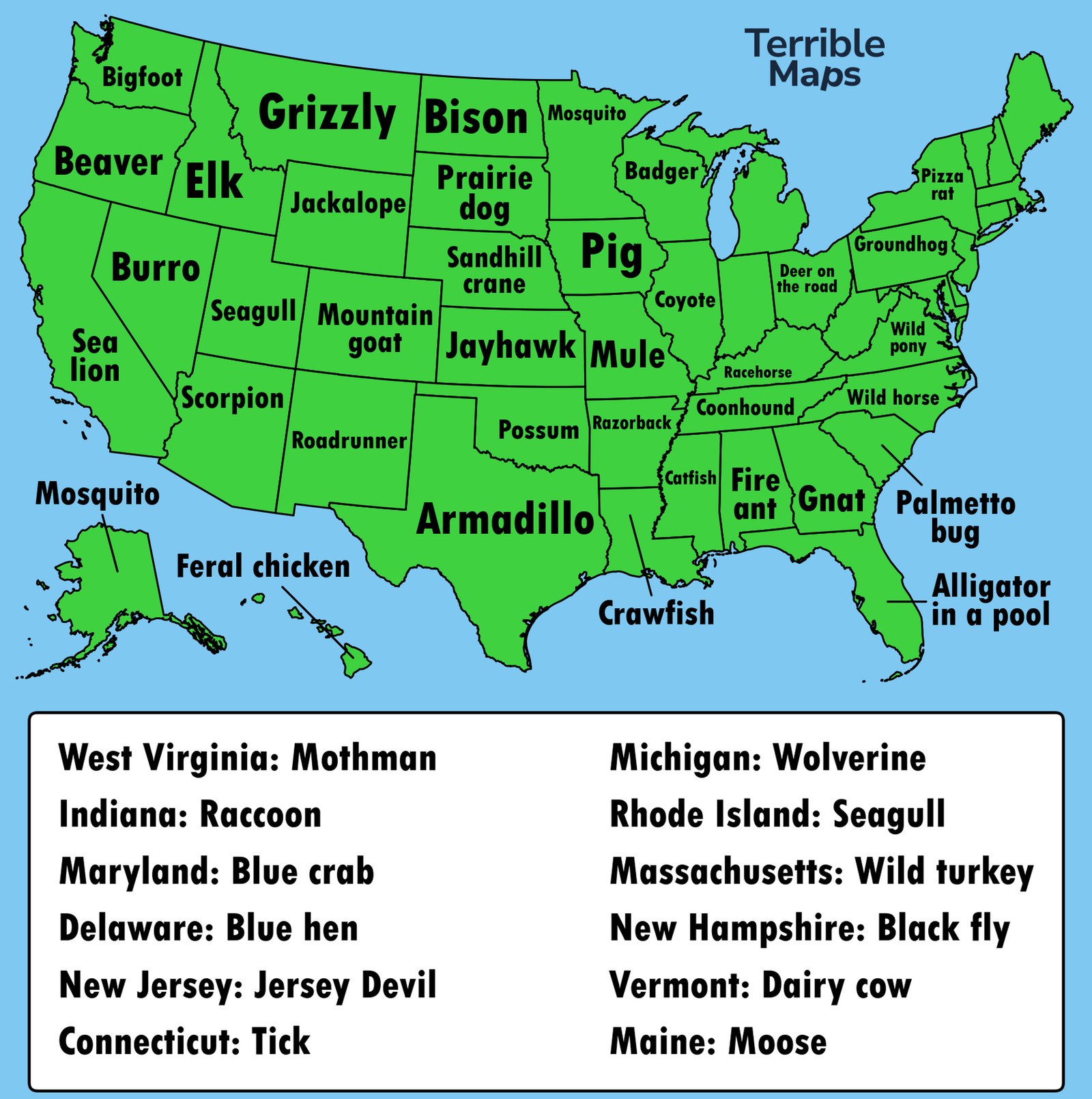
Florida gets an alligator in a pool and New Jersey gets the Jersey Devil. West Virginia’s Mothman was first reported near Point Pleasant in November 1966, and the town has held a Mothman Festival since 2002.
Source: Wikipedia, Mothman.
Where you can keep a pet raccoon in the US
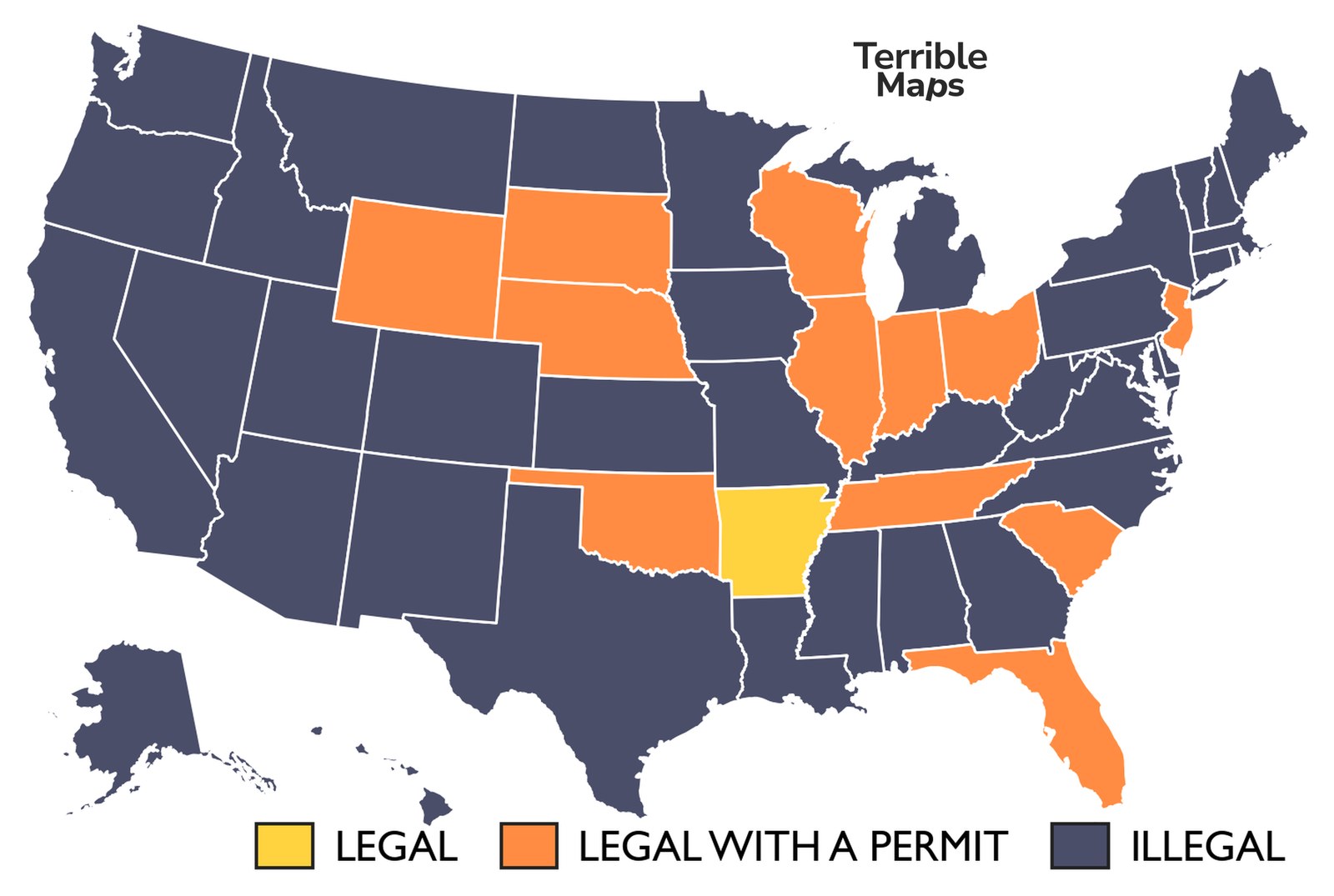
Arkansas is the only state where you can keep a pet raccoon without a permit. Twelve more will let you have one if you get a permit first, including Florida, Wisconsin and Wyoming. In the other 37 states it’s illegal, so the raccoons there have to make do with your bins.
Where you can keep a pet axolotl
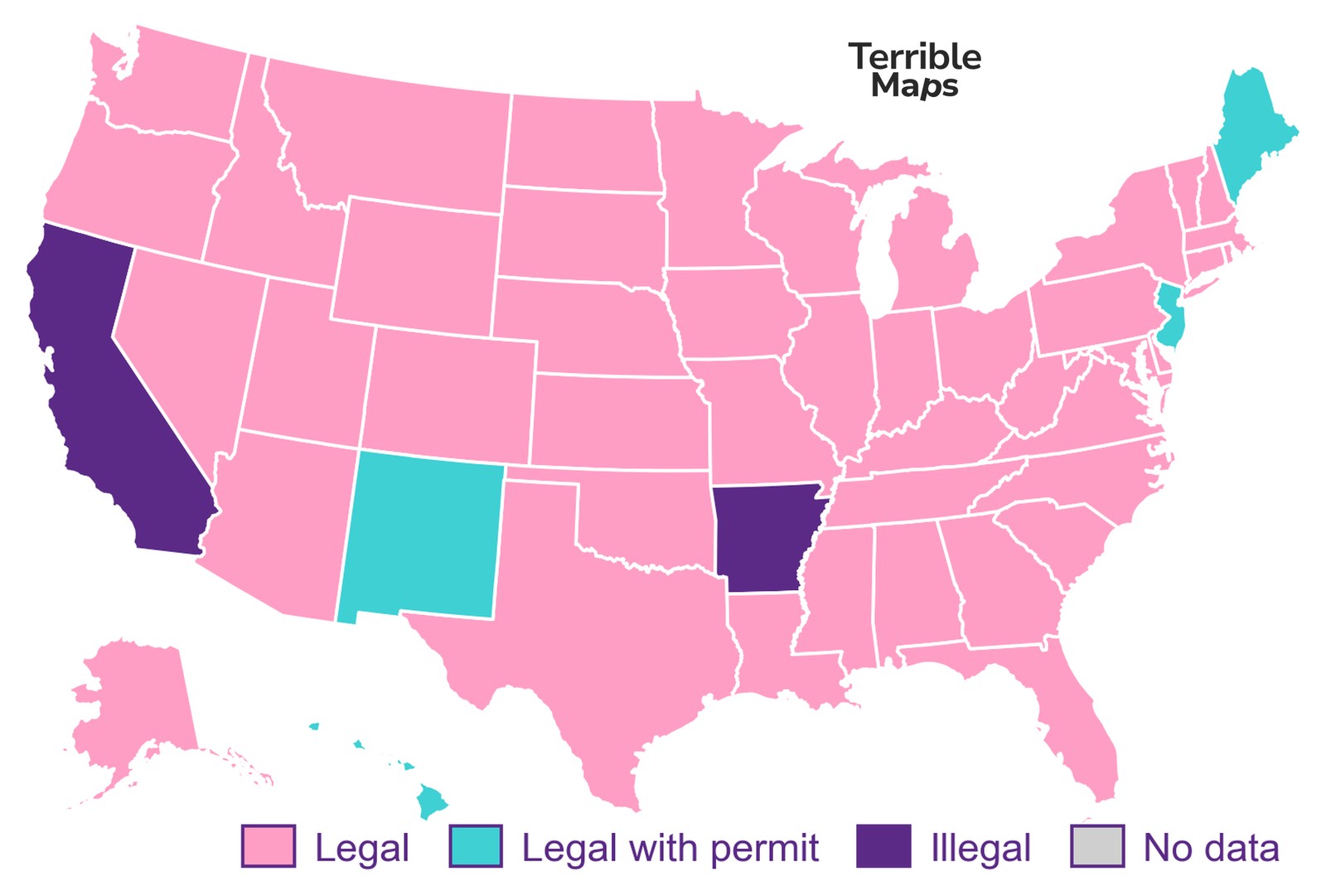
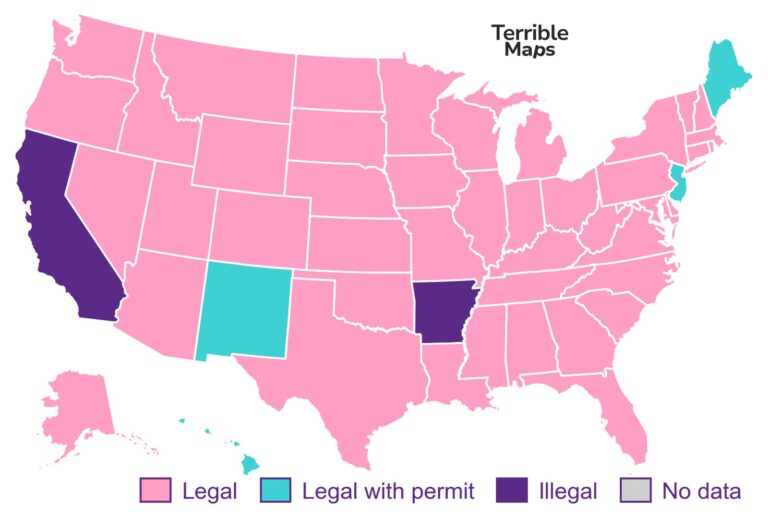
You can keep a pet axolotl in most of the US. California and Arkansas ban them, and four more states have permit rules. Virginia needs a permit for every nonnative mole salamander except the axolotl. So the only one Virginia lets you keep without a permit is the critically endangered one.
This map has its own post: Where you can keep a pet axolotl.
Sources: California, 14 CCR 671, Arkansas Game and Fish Commission, Maine, New Jersey, New Mexico, Hawaii, Virginia, 4VAC15-30-40, Conservation International.
Chances of being born in each US state (as an alligator)
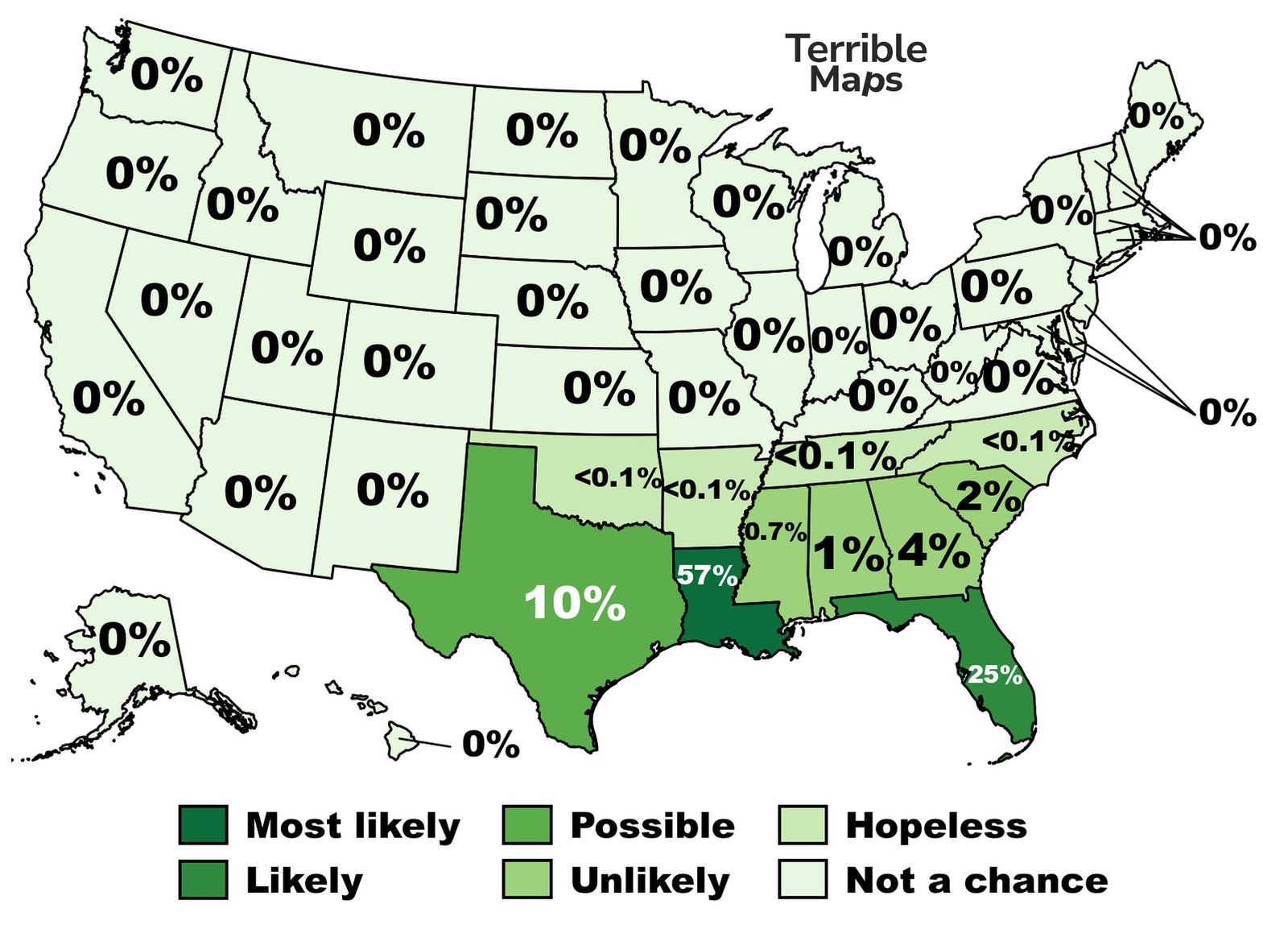
Most American alligators are born in Louisiana, which has about 3 million in the wild and 4.7 million people. Florida comes second with about 1.3 million alligators. In 39 states your chances are zero, and Ohio is one of them.
Sources: WLOX, citing Louisiana Wildlife and Fisheries, Florida Fish and Wildlife Conservation Commission.
Who each country says the ladybird belongs to
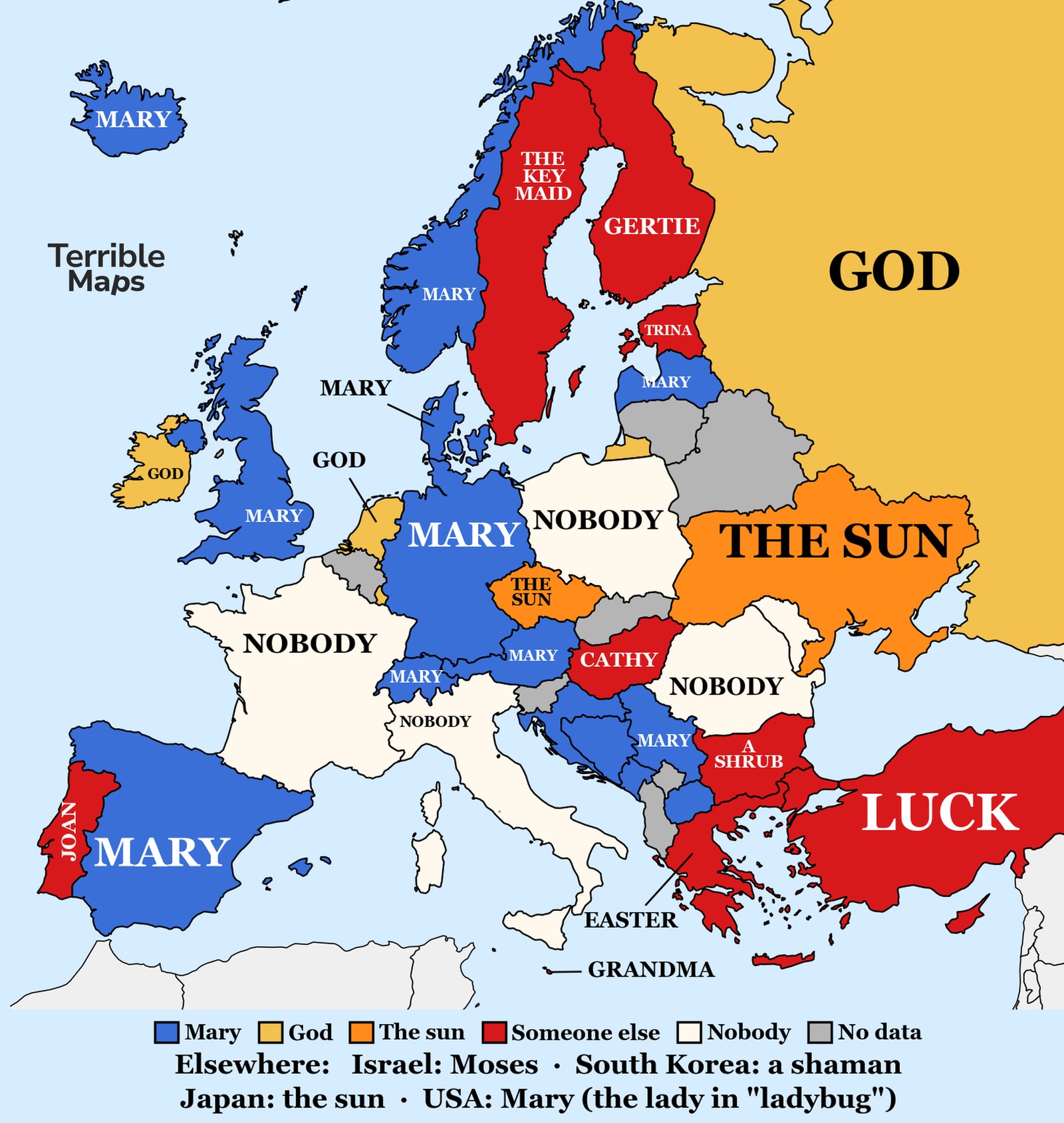
The lady in ladybird is the Virgin Mary, and so is the Marien in Marienkäfer, the German word. In Russian it’s God’s little cow. Hungary calls it Cathy, after an old nursery rhyme. Finland went with Kerttu, a girl’s name.
This map has its own post: Who each country says the ladybird belongs to.
Sources: Wiktionary, ladybird, Marienkäfer, божья коровка, katicabogár, leppäkerttu.
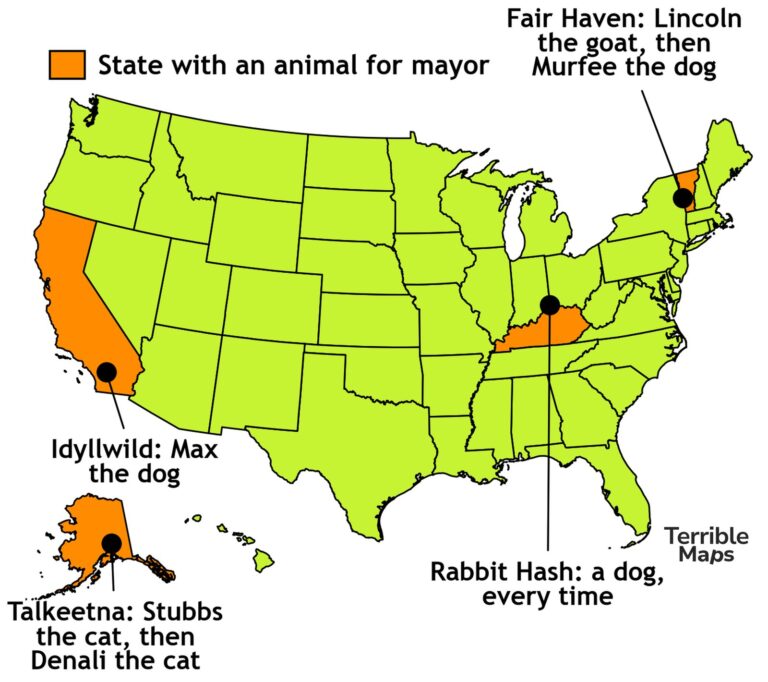
US towns with an animal for mayor
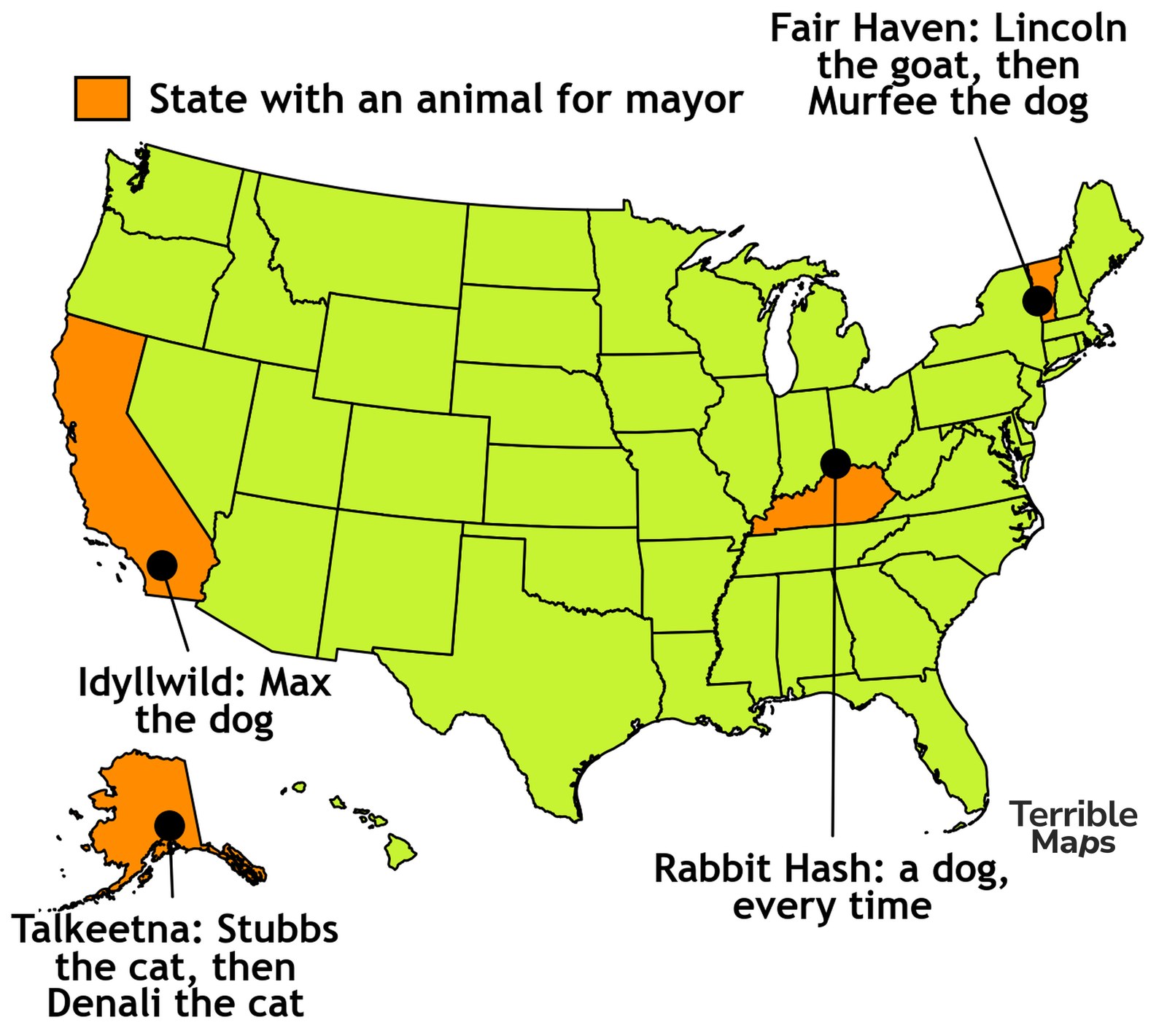
In 2019 Fair Haven, Vermont, elected Lincoln the goat as its pet mayor, to raise money for a new playground. A year later she lost to Murfee, a therapy dog. Stubbs the cat was the honorary mayor of Talkeetna, Alaska, for 20 years. The town has no mayor, and Stubbs never won an election.
This map has its own post: US towns with an animal for mayor.
Sources: VTDigger, WHDH, Wikipedia, Stubbs (cat).
Countries with an official government cat
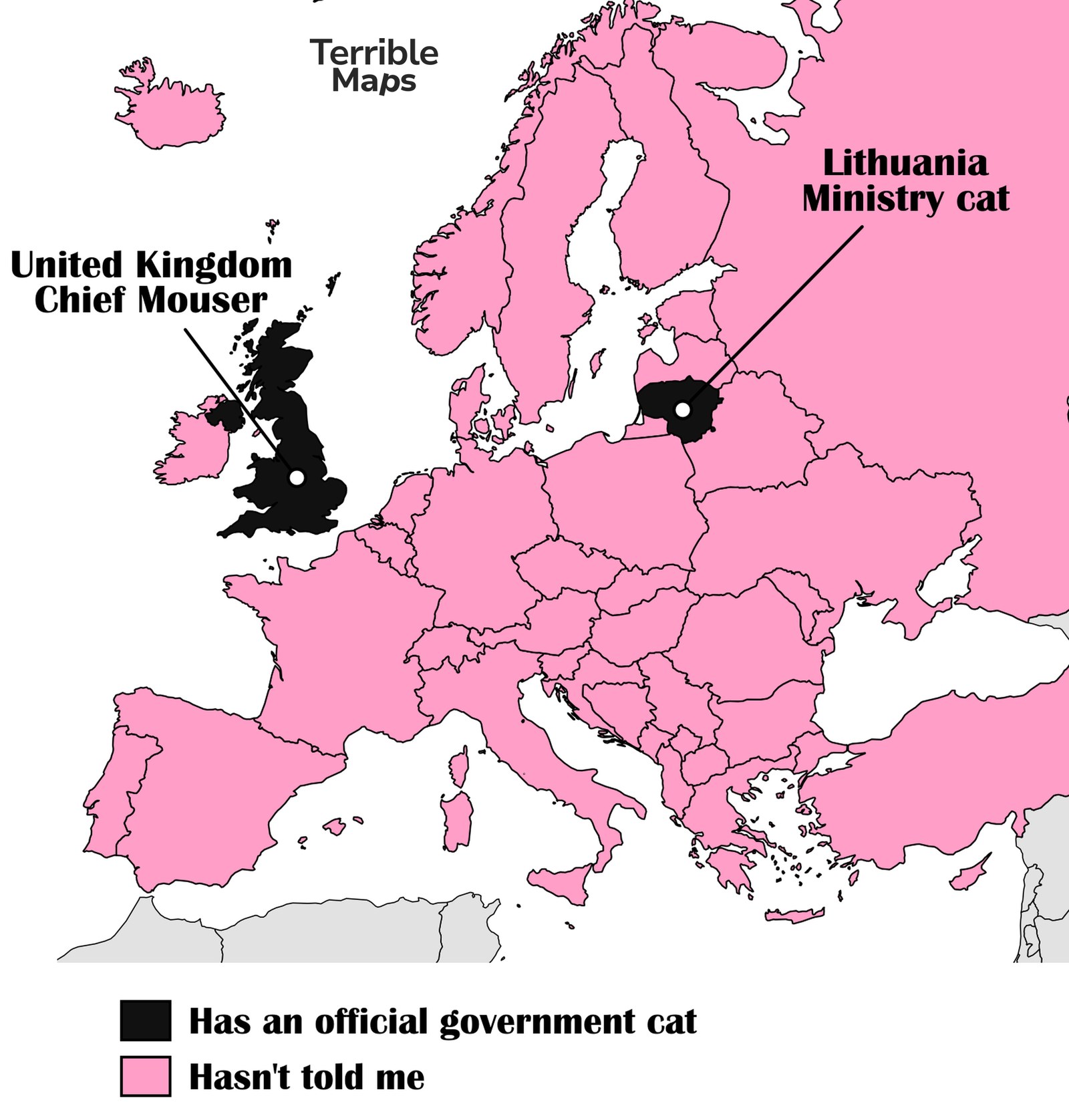
Larry came from Battersea Dogs & Cats Home in 2011. He was the first cat at Number 10 to get the official title of Chief Mouser to the Cabinet Office. Lithuania’s foreign ministry has an official cat as well. Larry’s duties include “contemplating a solution to the mouse occupancy of the house”, which his government page says is still in the tactical planning stage.
This map has its own post: Countries with an official government cat.
Sources: GOV.UK, History of 10 Downing Street, Wikipedia, Ministry of Foreign Affairs (Lithuania).
What Australia would look like if the emus had won the Emu War
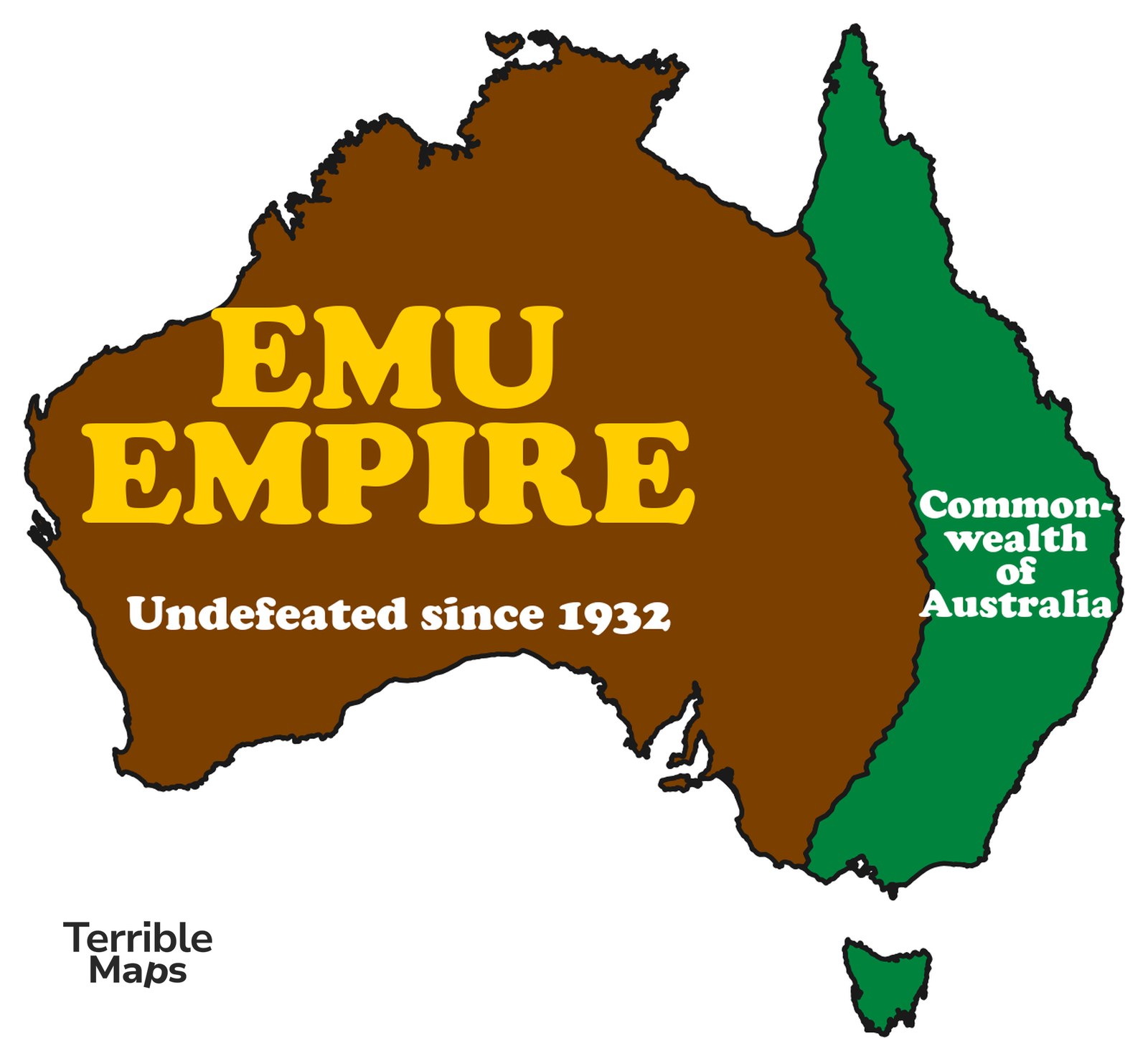
In 1932 about 20,000 emus moved onto the wheat farms of Western Australia. The government sent a major, a sergeant, a gunner, two Lewis guns and 10,000 rounds. The soldiers reported 986 emus killed with 9,860 rounds, exactly 10 bullets an emu. The farmers asked for the army again in 1934, 1943 and 1948, and were turned down every time.
This map has its own post: What Australia would look like if the emus had won in 1932.
Source: Wikipedia, Emu War.
Share these maps
More from Terrible Maps
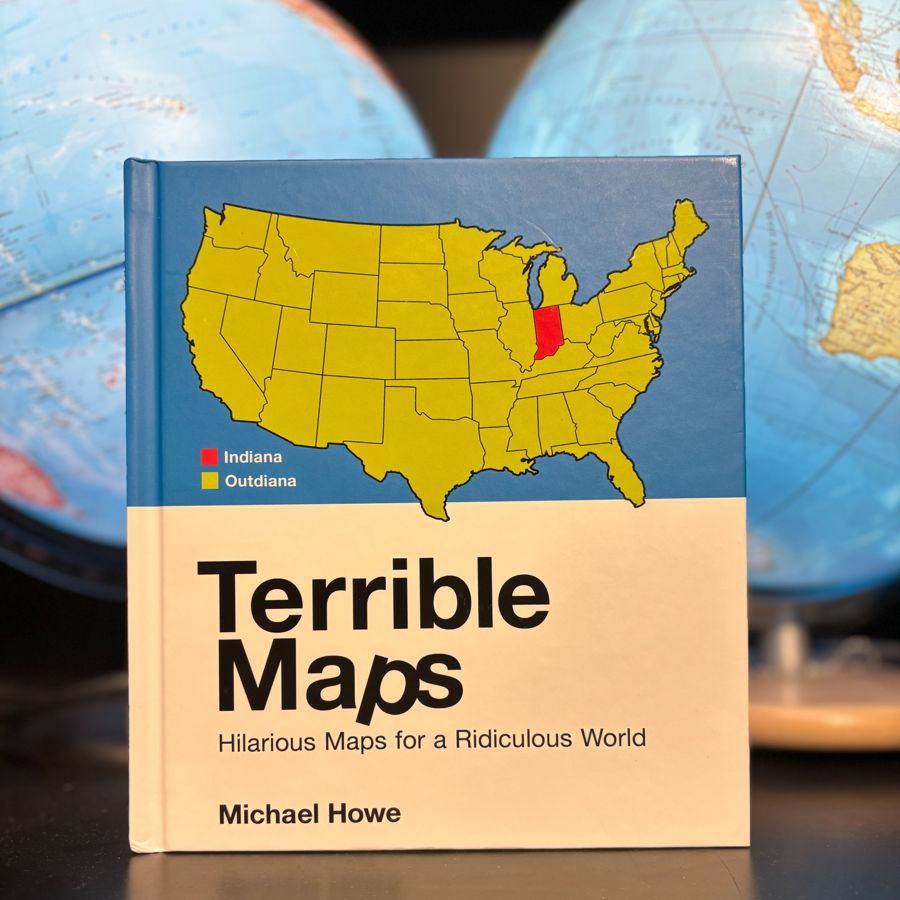 The bookTerrible Maps: Hilarious Maps for a Ridiculous WorldOut now in the UK, US, Canada and Australia.
 The shopShirts, hoodies, mugs and printsIncluding the Africa / Asia T-shirt.
There’s a new terrible map most days on Facebook and Instagram.