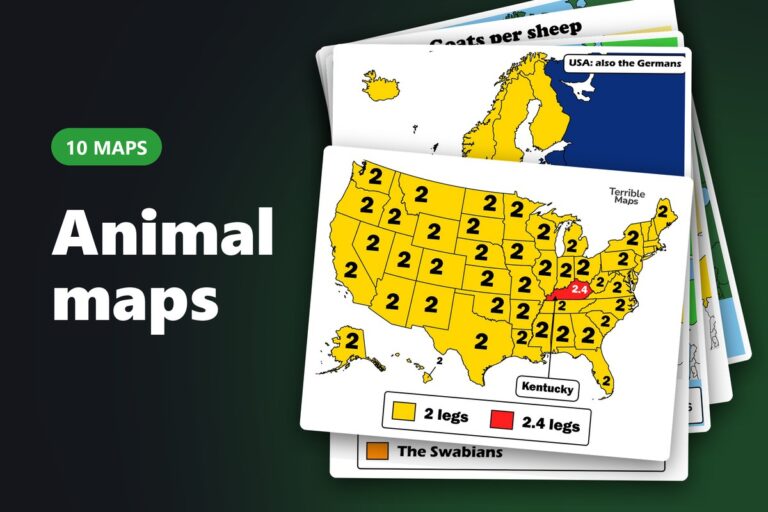
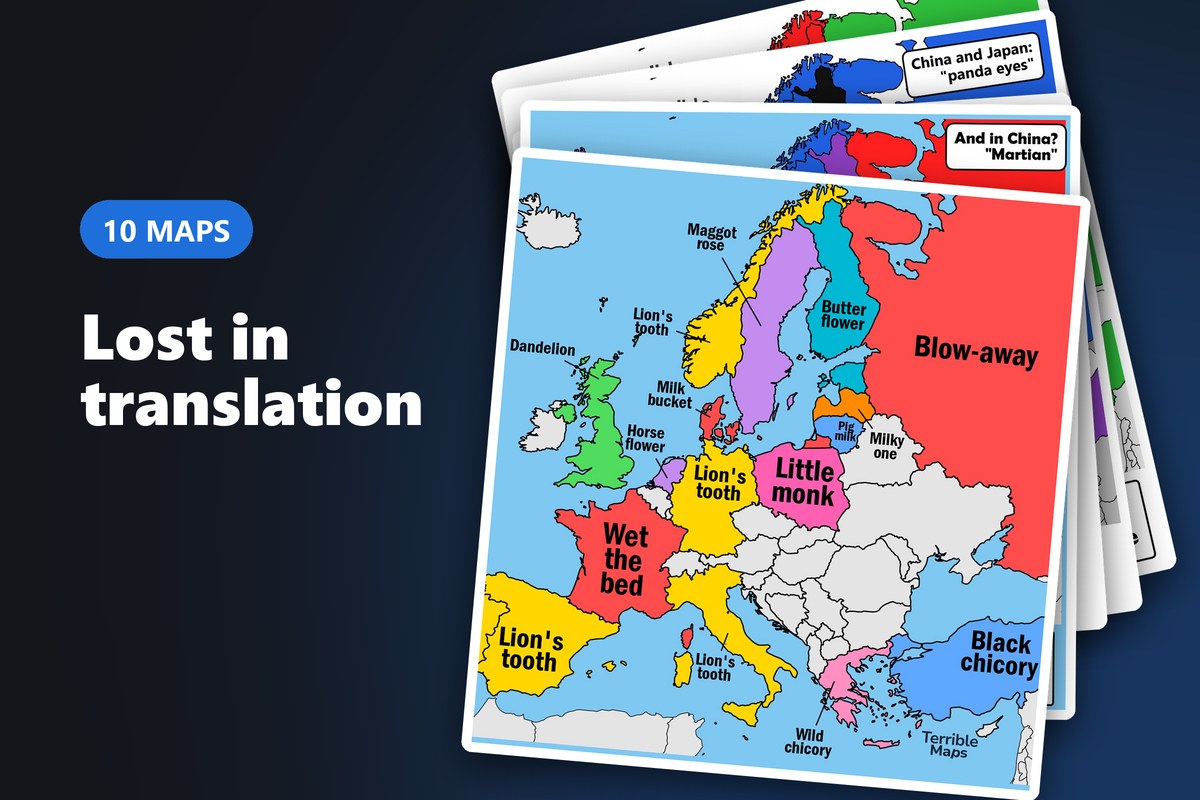
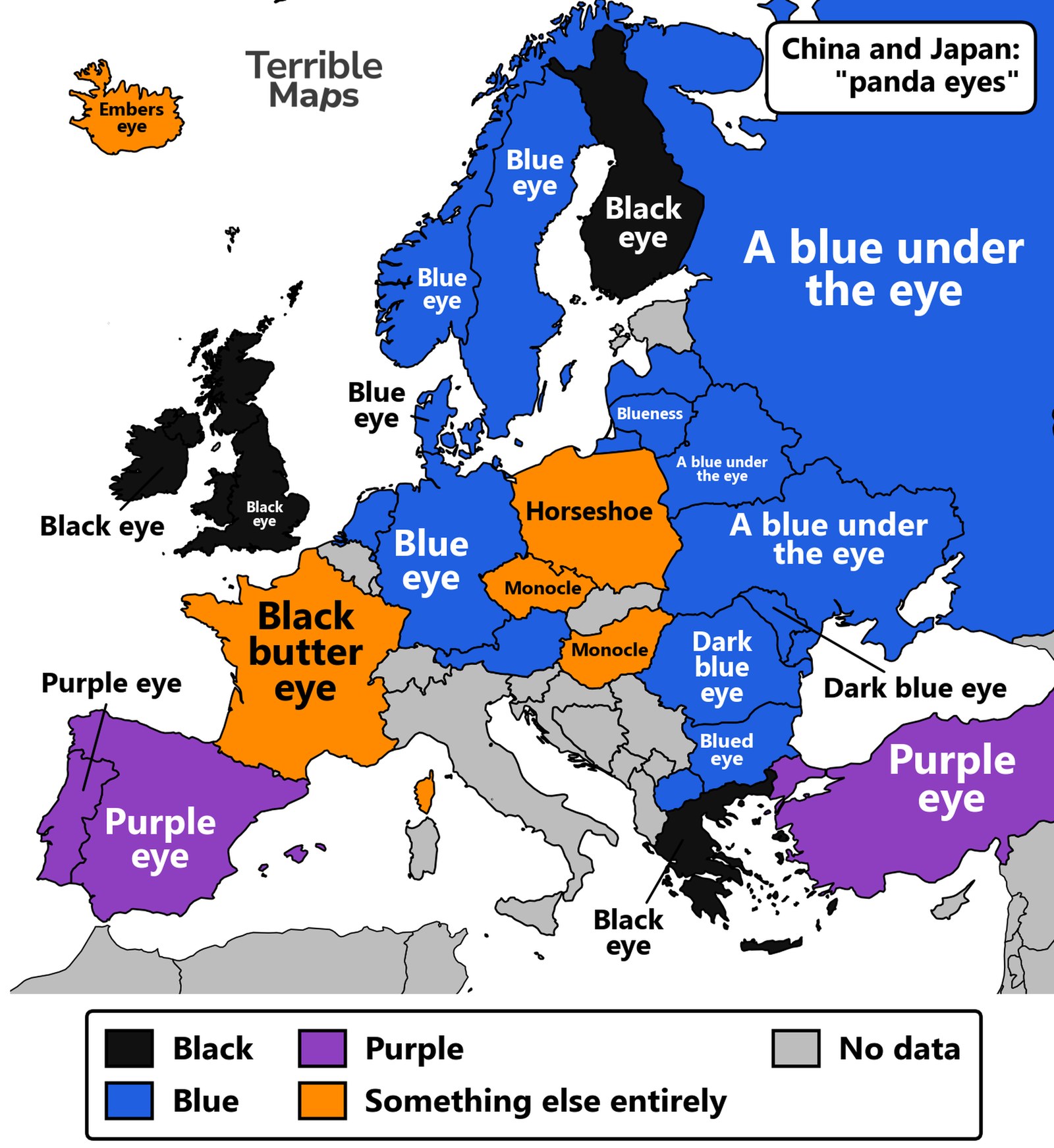
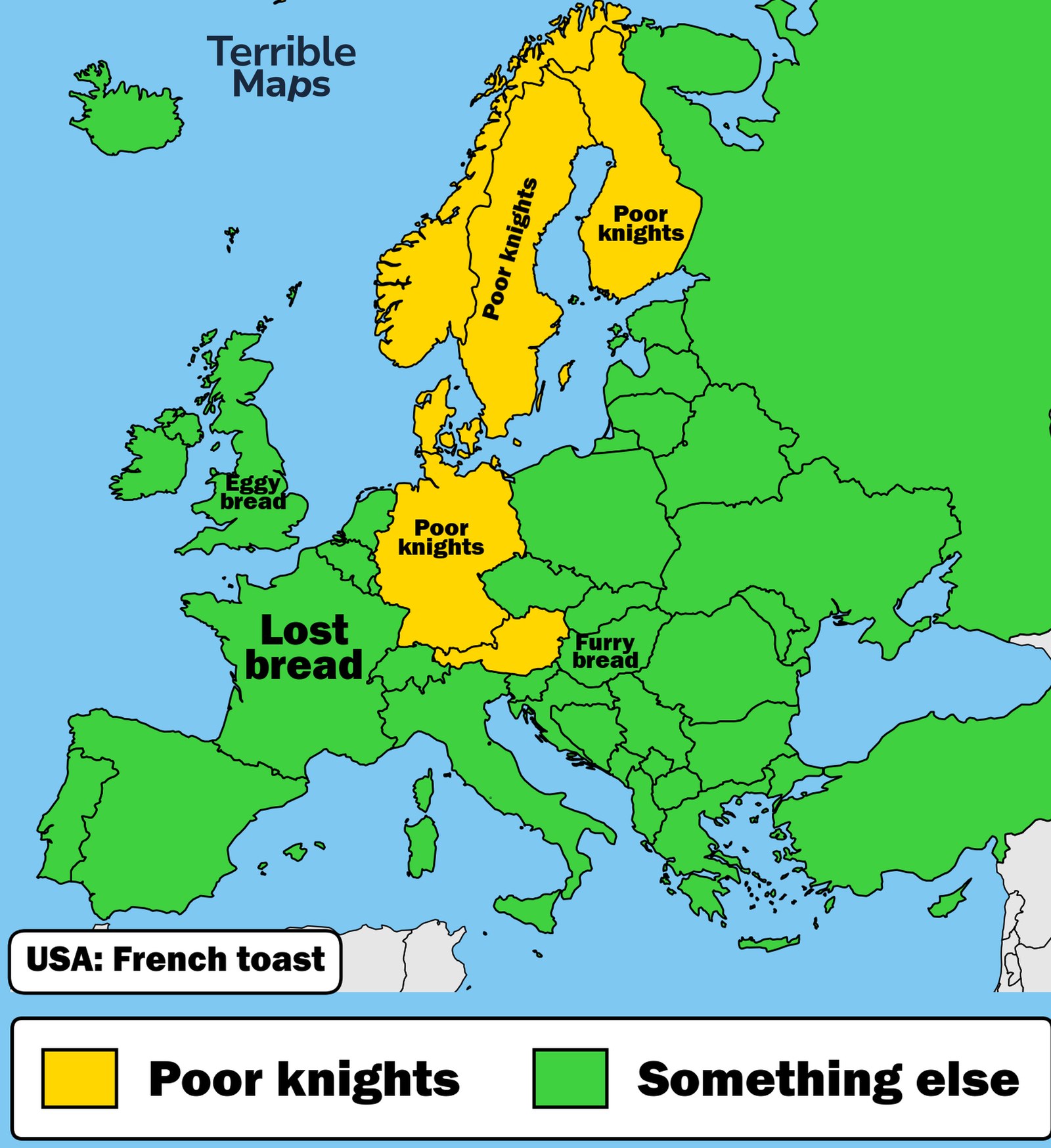
Ten maps of what Europe calls things, translated word for word, from dandelions and heavy rain to black eyes, French toast and the Danish pastry, which Denmark names after Vienna.
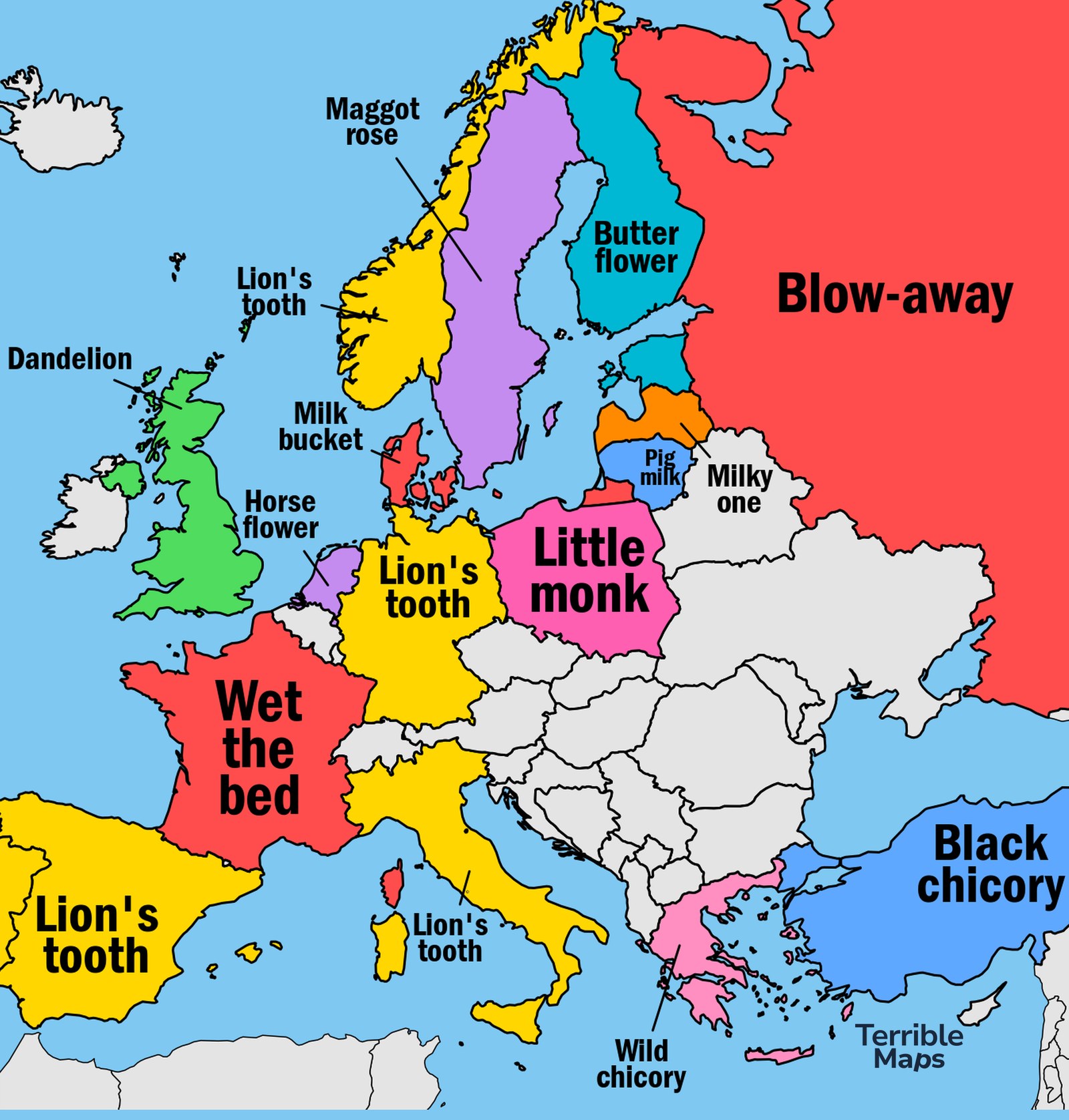
What Europe calls a dandelion, translated
The English name comes from the French dent de lion, a lion’s tooth, and the German Löwenzahn means the same. The French themselves now say pissenlit, from pisse en lit, after the plant’s diuretic effect, and in Polish it’s a little monk.
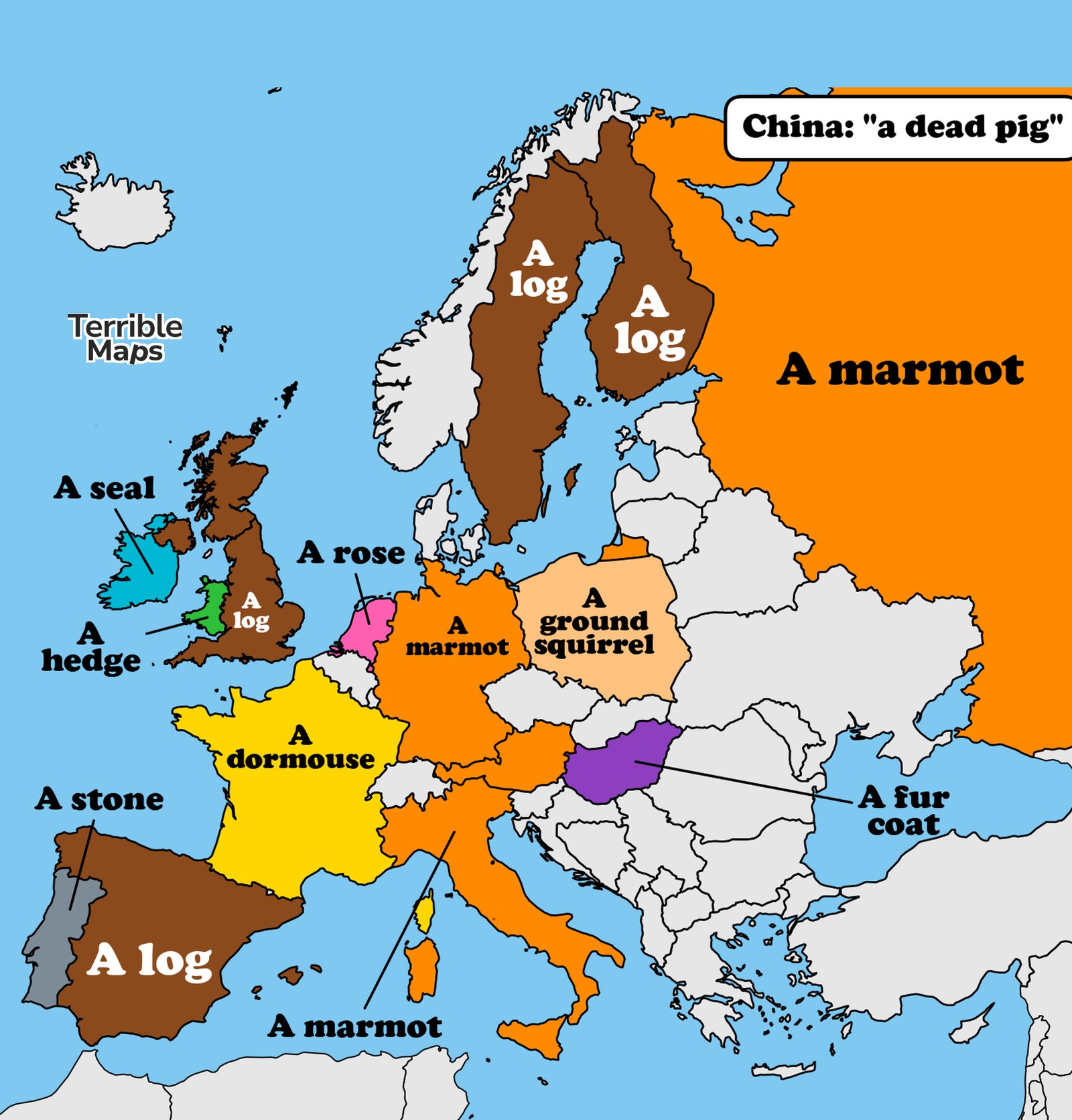
The English sleep like a log, and so do the Swedes, Finns and Spanish. Germans and Italians sleep like a marmot, and in Mandarin you sleep like a dead pig.
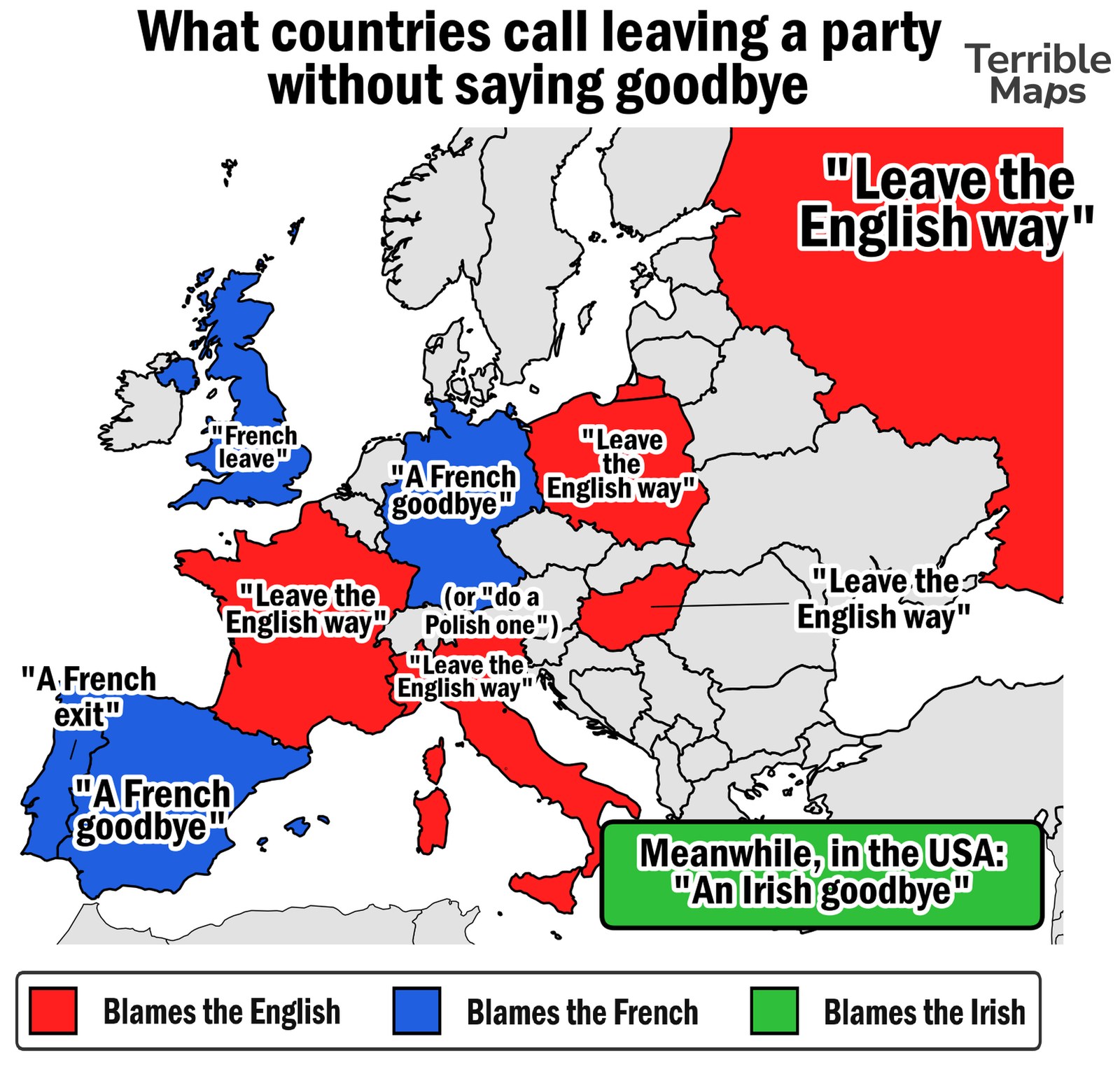
What countries call leaving a party without saying goodbye
English speakers call it French leave, first recorded in 1751, and the French call it filer à l’anglaise, leaving English style. Italians and Poles blame the English too, while Americans call it an Irish goodbye.
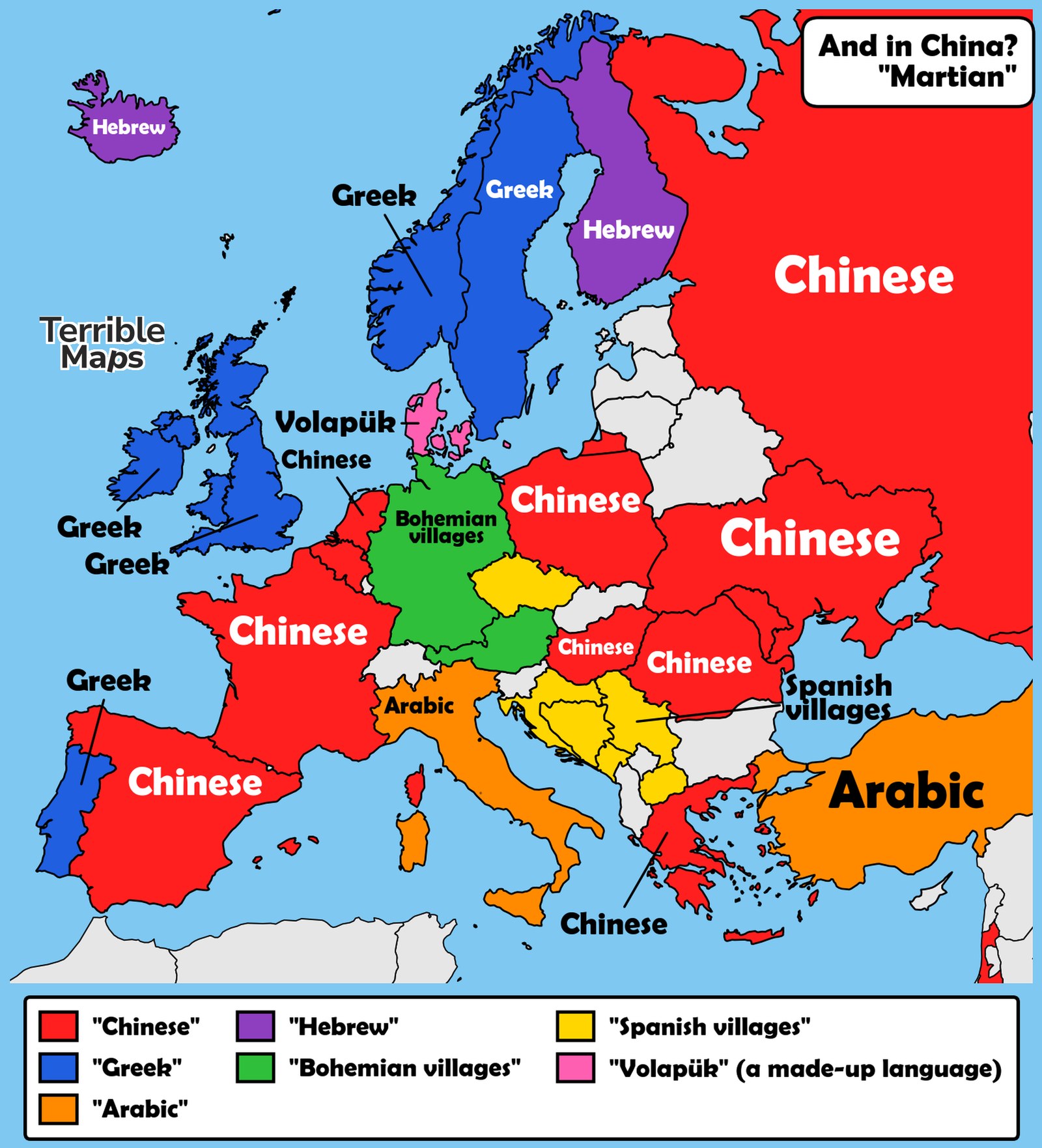
It's all Greek to me: who each language says it can't understand
The English version is Shakespeare’s, from Julius Caesar. Germans say it’s Bohemian villages to them, Czechs say Spanish villages, Danes say pure Volapük, a language invented in 1879, and in Mandarin it’s Martian.
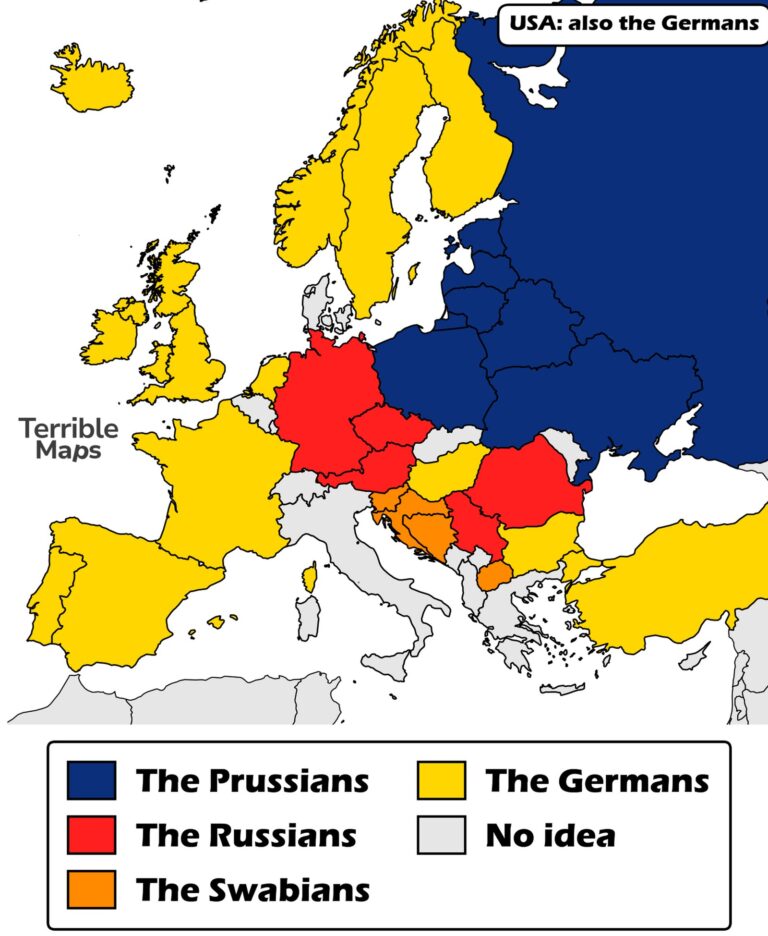
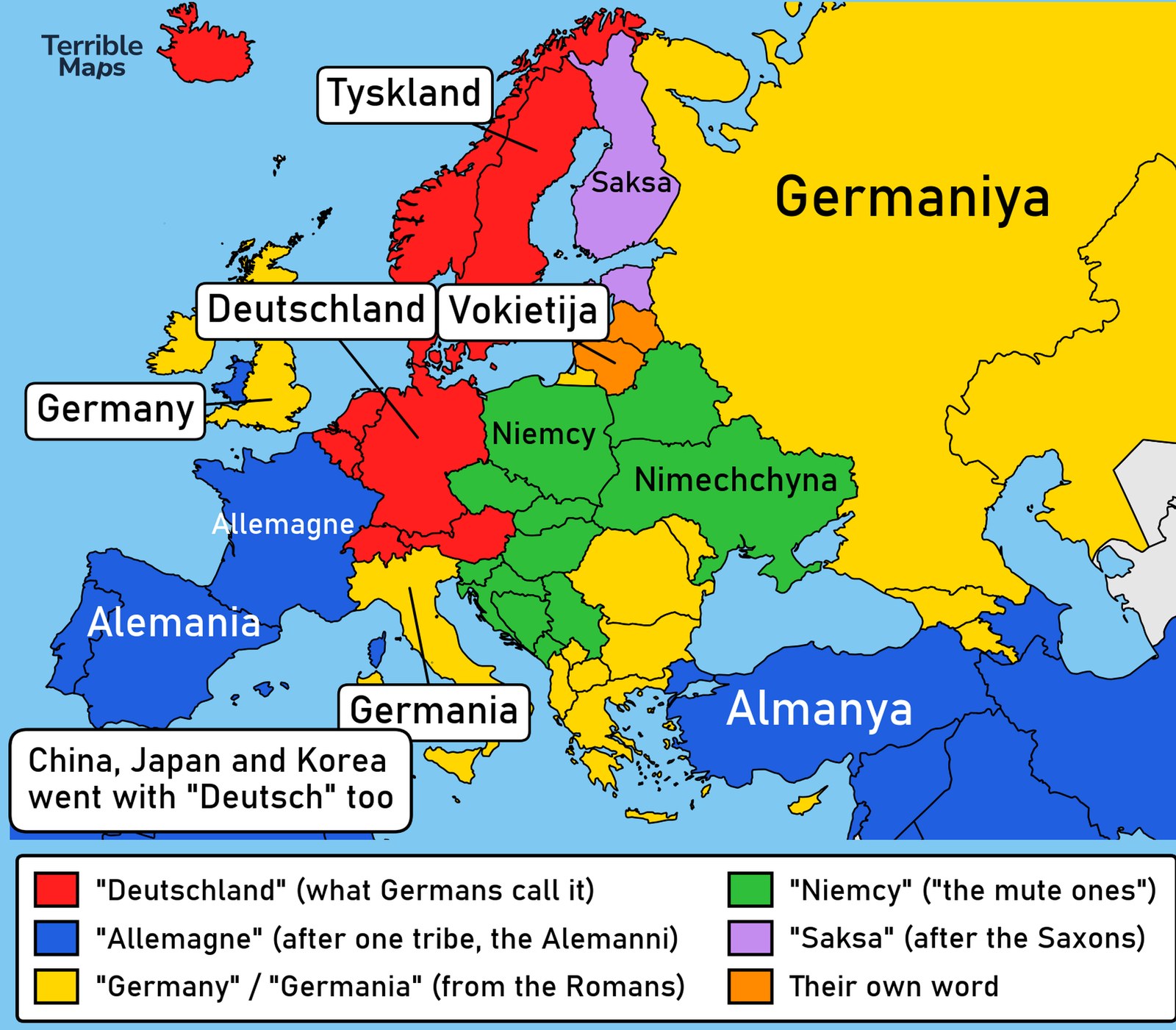
Germany calls itself Deutschland, from an old word meaning of the people. France and Spain named it after the Alemanni tribe, Finland after the Saxons, and the Polish Niemcy comes from a word for speechless.
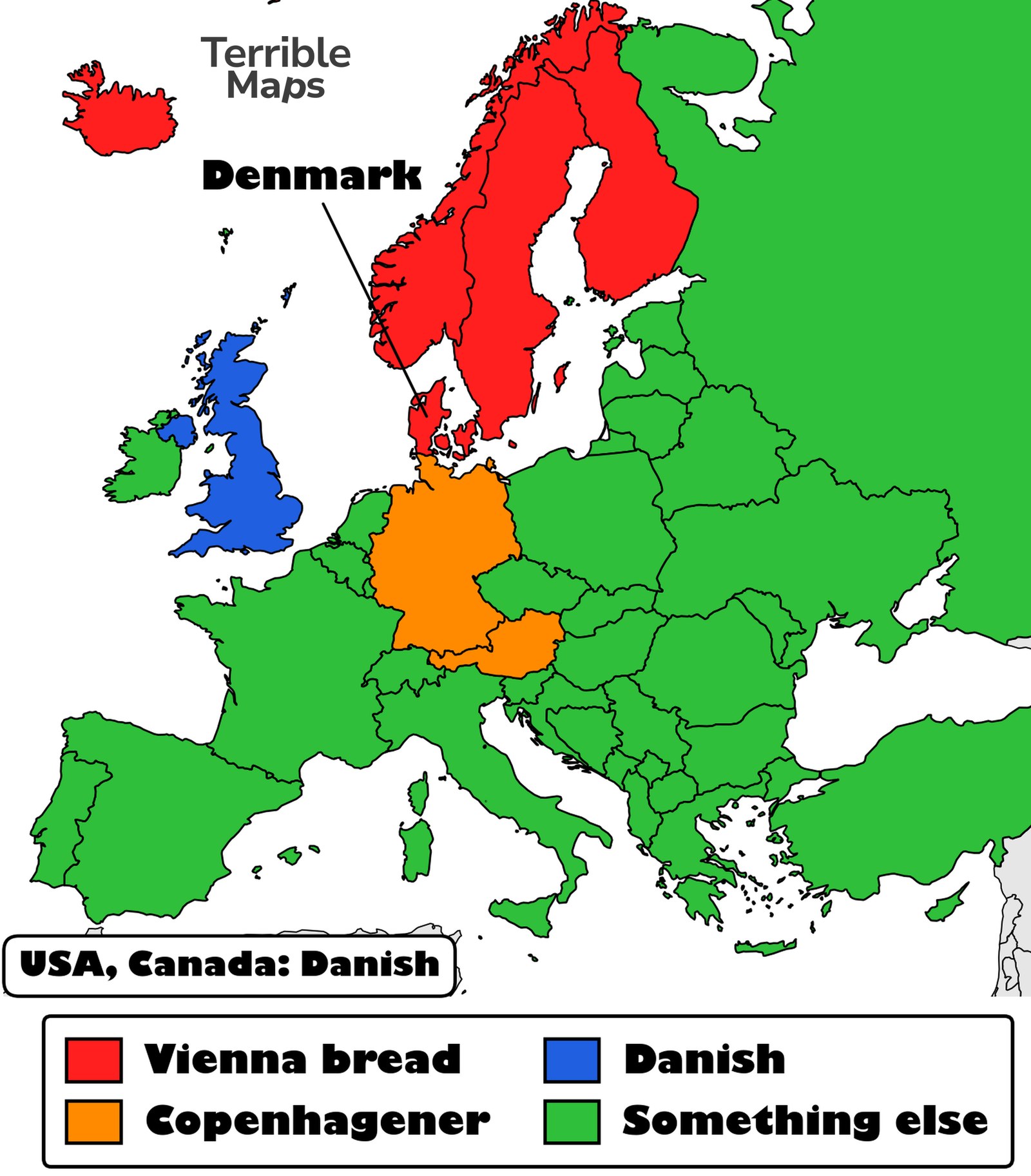
In Denmark, Norway and Sweden it’s wienerbrød, Vienna bread. The usual story is that Danish bakeries hired Austrian bakers during a strike in 1850. In Austria it’s a Kopenhagener.
 The bookTerrible Maps: Hilarious Maps for a Ridiculous WorldOut now in the UK, US, Canada and Australia.
 The shopShirts, hoodies, mugs and printsIncluding the Africa / Asia T-shirt.